
Last updated November 14, 2026
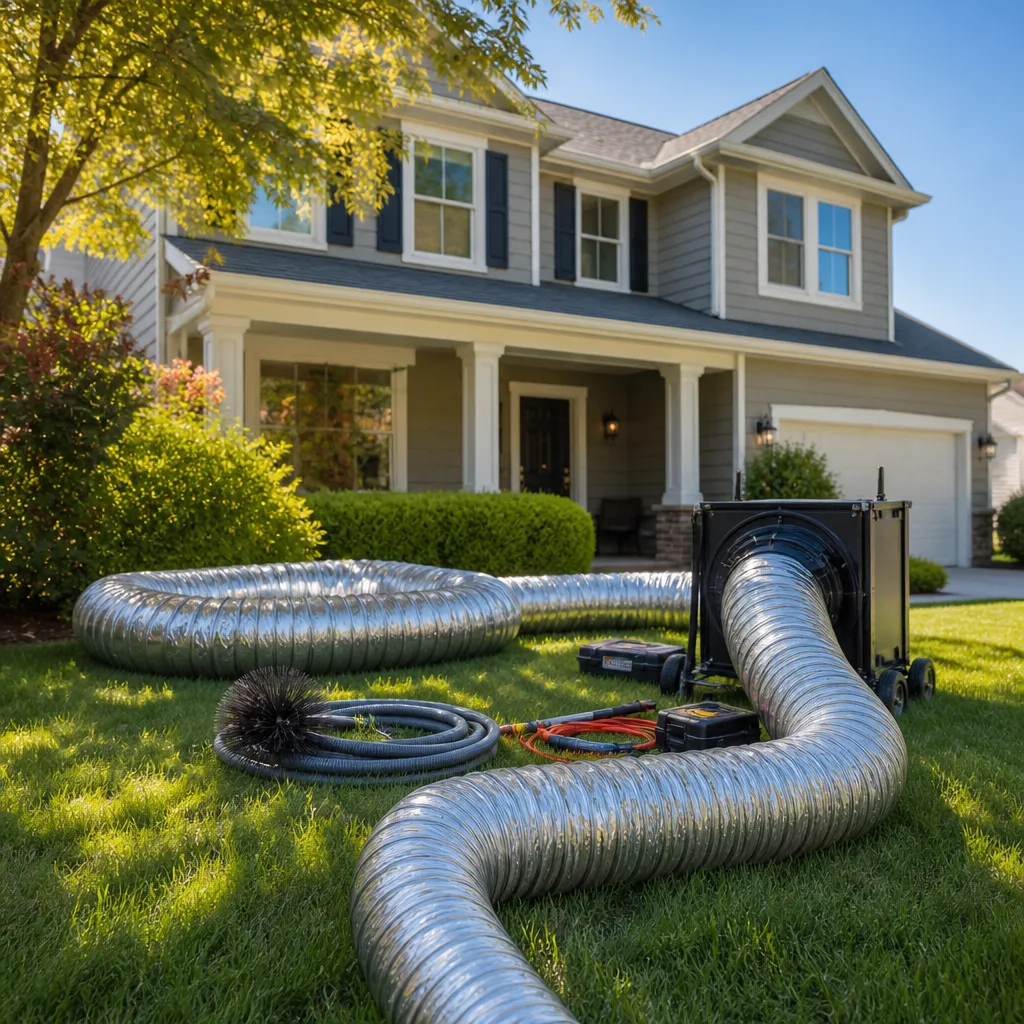 Whole-home duct cleaning
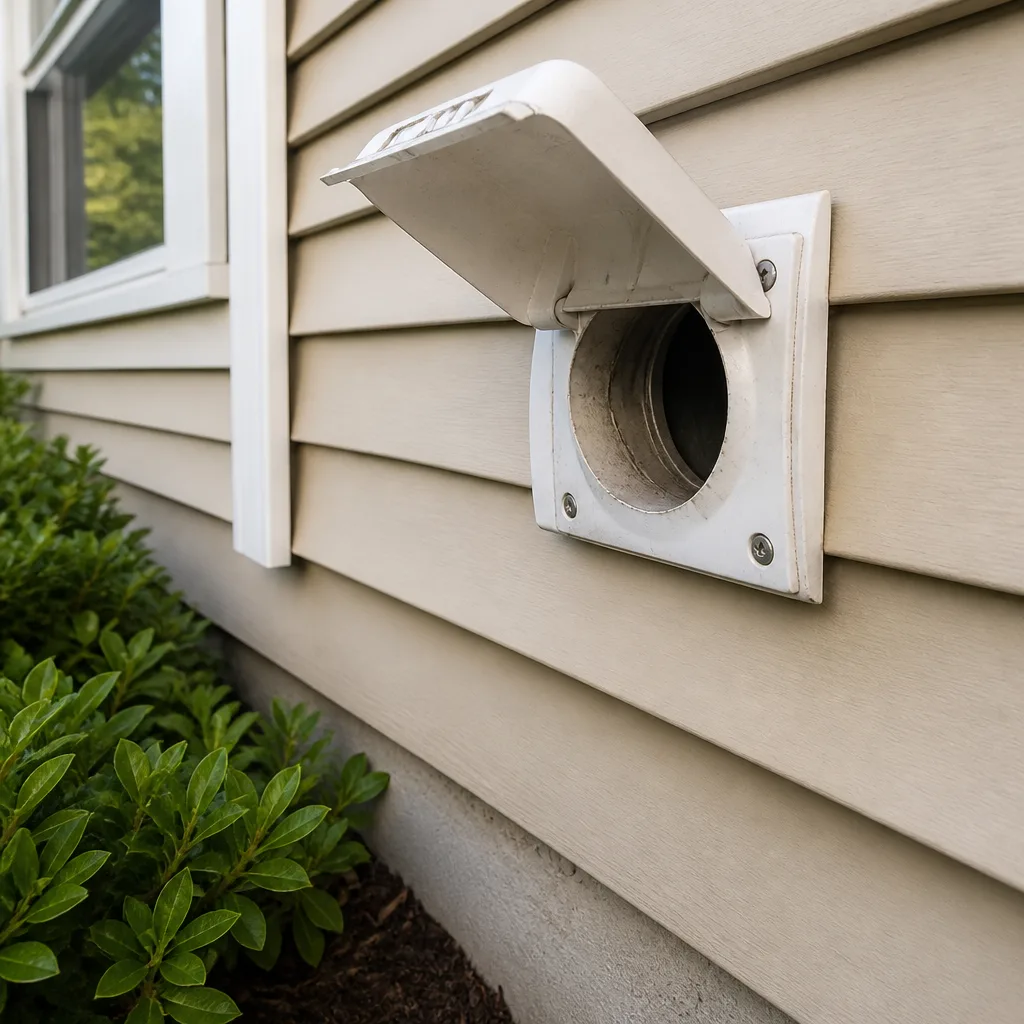 Dryer vent cleaning
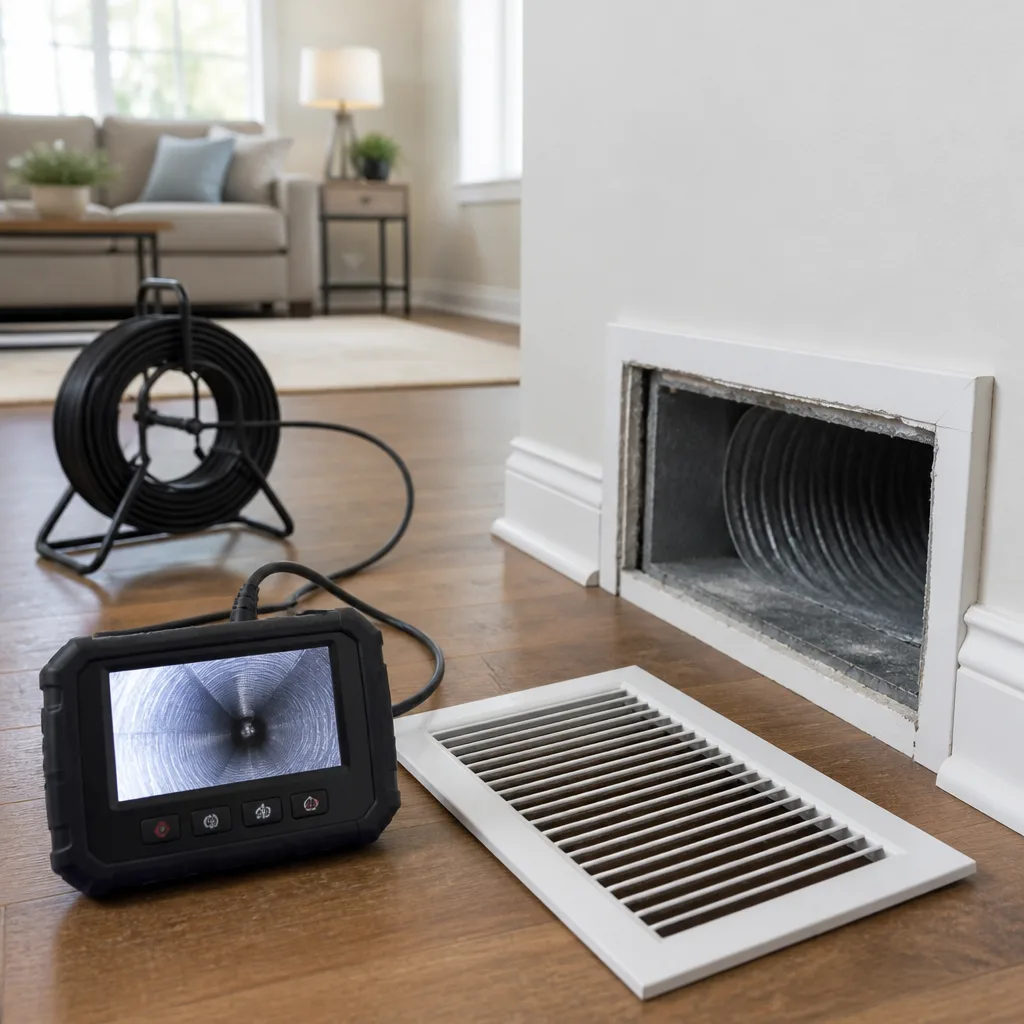 Camera inspection
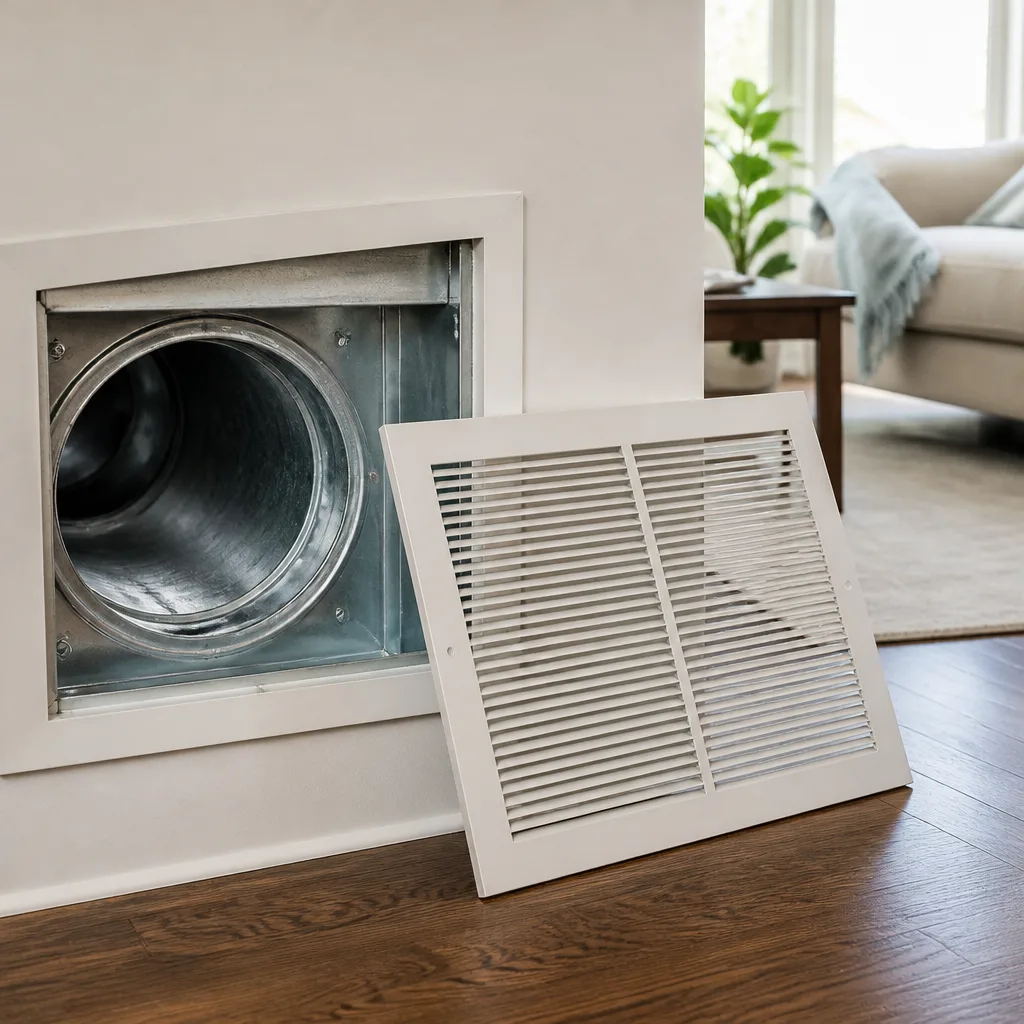 Sanitizing & deodorizing
Whole-system duct and dryer vent check with before-and-after photos - you see exactly what came out of your vents
That "$99 whole-house special" is a bait ad - the real number appears once they are in your hallway, or the "clean" is a shop-vac at the register. We photograph the inside of your ducts before and after instead.
Air Duct Cleaning Maintenance Checklist for Meridian Homeowners
If your 1-inch filter is loading up in under 3 weeks, that’s not a dust problem. It’s a duct system telling you airflow is restricted somewhere upstream, and swapping filters faster doesn’t fix the underlying condition. Most homeowners treat duct care as a single task – change the filter, maybe book a cleaning every few years – when it’s actually a system-level inspection protocol. Your HVAC performance, filter loading rates, and duct condition interact constantly, and the only way to catch problems early is to track them over time. This guide gives you a month-by-month checklist calibrated to Meridian’s seasons, teaches you how to read filter loading as a diagnostic signal, and covers the failure points most homeowners never check. Whether you’re in a newer build off Chinden or an older home near downtown Meridian, the protocol is the same.
Quick Answer
A proper air duct maintenance checklist for Meridian combines monthly filter inspection, seasonal register checks tied to local pollen, smoke, and harvest dust cycles, annual humidity logging, and professional duct inspection every 2-3 years (sooner if pets, a fireplace, or an attached garage are in the picture). The goal isn’t more frequent cleaning – it’s tracking the interaction between filter loading rate, airflow, and duct condition so you know when cleaning is actually needed rather than guessing.
Styles & brands we work with
- Whole-home duct cleaning
- Dryer vent cleaning
- Camera inspection
- Sanitizing & deodorizing
Table of Contents
- Why a Standard Filter-Change Reminder Falls Short in Meridian
- The Month-by-Month Meridian Duct Maintenance Schedule
- How to Read Filter Loading Rate as a Diagnostic Signal
- Supply vs. Return Register Inspection: What to Look For
- Why Humidity Logging Matters in Meridian’s Dry Winters
- Special Cases: Pets, Fireplaces, and Attached Garages
- When Professional Air Duct Cleaning Makes Sense
- How to Document Your Duct System Over Time
Why a Standard Filter-Change Reminder Falls Short in Meridian
“Change your filter every 90 days” is the advice on every filter package, and in Meridian it’s often wrong in both directions. A home near the foothills dealing with spring pollen and summer wildfire smoke might load a filter in three weeks. A newer, tightly sealed home with no pets might stretch a filter well past the 90-day mark. The manufacturer doesn’t know your duct system, your neighborhood, or how many hours a day your system runs.
What matters more than a fixed calendar is the rate of change. When you measure how fast a filter loads, you’re measuring how much particulate is entering the return side and how hard the blower is working to pull air through. A filter that loads fast in the same home year after year usually points to a specific condition: leaky return ducts pulling attic or garage air, an undersized return path, or a blower that’s pushing against restricted ducts.
In our experience across Meridian homes, the single fastest filter-loaders we inspect are usually attached-garage returns or homes with an unsealed return chase. Those aren’t filter problems – they’re duct problems. Filter swapping hides them. Inspection finds them.
This is why we treat duct maintenance as a system protocol, not a chore list. Call it what it is: a diagnostic tool. Every check on the schedule below is designed to surface a signal that filtering alone can’t produce.
The Month-by-Month Meridian Duct Maintenance Schedule
Meridian’s four seasons hit your duct system in very different ways. Spring brings a heavy pollen load from area trees and grasses. Summer brings wildfire smoke that can settle into ductwork during smoke events. Fall kicks up harvest dust from surrounding agricultural ground. Winter closes the house up, recirculates air constantly, and drops humidity low enough to change how dust behaves. A generic “check twice a year” schedule ignores all four.
Here’s the schedule we recommend to Meridian homeowners. Adjust the filter-interval timing based on what you actually observe, not the label on the box.
- March (spring pollen ramp-up): Log the filter load date. Note whether the filter shows a uniform grey coating or a patchy, one-sided pattern. Uniform means normal loading; patchy means restricted airflow or a duct leak.
- April-May (peak pollen): Inspect supply registers in every room for visible dust accumulation on the grille face. Check return grilles for debris collected at the throat. Snapshot both with your phone.
- June (pre-smoke season): Confirm the filter is fresh before fire season and check door and window weatherstripping. Smoke intrusion around gaps loads the return side fast.
- July-August (wildfire smoke): During any smoke event, log your filter load date and check a supply register for a dark, sooty film. If smoke is entering the system, don’t just swap filters – find the leak.
- September-October (harvest dust): Check return grilles weekly. Harvest dust is heavier than pollen and settles at the return throat faster than it does at supply registers.
- November (pre-closed-house): Schedule the annual filter/register/humidity baseline before windows close for the winter. Note the date and photograph every register.
- December-February (closed-house recirculation): Log humidity readings weekly. Dry winter air causes static-attracted dust to cling to duct walls and register faces; write down the reading so you can compare across years.
The full protocol only takes about twenty minutes a month once you’re used to it. For a deeper look at what all that information tells you, our Duct Cleaning Meridian service page explains how a professional inspection reads the same signals at the system level.
How to Read Filter Loading Rate as a Diagnostic Signal
Filter loading rate is the amount of time between filter changes in the same home, same season, same filter type. If that number shrinks from 60 days to 20 days without a change in pets, occupants, or filter brand, something in the system has changed and the filter is the messenger, not the cause. Homeowners who track this number build a diagnostic history that’s worth more than any single inspection.
Four patterns are worth knowing:
- Uniform fast loading: The filter loads evenly across its face in a short interval. This usually means return-duct air is carrying more particulate than it should – a leaky return in an attic, crawlspace, or garage is a common cause.
- One-sided or patchy loading: One corner loads while the rest stays clean. This points to restricted airflow on one return branch or an internal duct obstruction.
- Loading faster only in winter: Dry indoor air creates static attraction that pulls dust onto registers and duct walls, so more of it reaches the filter. This is normal but should still be logged so you can spot a real change.
- Sudden load after a renovation, move-in, or new pet: Usually temporary. Log it and watch whether the rate returns to normal within two filter cycles.
A 1-inch filter loading in under 3 weeks is the classic restricted-airflow signal. A 4-inch or 5-inch media cabinet filter – the kind that works with air duct cleaning systems using Aprilaire media cabinets – should last far longer, and if it doesn’t, the return-duct path is underperforming. A Honeywell or Aprilaire media filter loading at half its expected rate is a clear signal to have the ducts inspected, not a reason to buy filters in bulk.
Supply vs. Return Register Inspection: What to Look For
Supply registers blow clean air into rooms. Return registers pull dirty air back toward the system. Those two jobs sound symmetric, but they’re not – returns are the more critical failure point in almost every Meridian home we inspect. That’s because every pound of debris that enters the return side passes through the blower, the coil, and the filter before it ever reaches a supply register.
Here’s what to look for on each:
Supply registers
- Uniform dust coating on the grille face is normal. Streaky, vertical dust tracks point to an oversized supply or a supply boot leaking at the ceiling connection.
- Visible dark soot film during or after a smoke event means smoke is entering the system, which usually means a return-side leak.
- Weak airflow at any single register while others in the same zone blow strongly is a red flag for a disconnected or crushed supply run.
- Whistling or high-pitched sound is a signal of restricted duct or undersized ducting, not just a loose grille.
Return registers
- Heavy, fibrous debris at the return throat – pet hair, lint, carpet fibers – is the most common visual we find and the strongest argument for regular return-side inspection.
- Visible gaps around the return frame where you can see into the wall or ceiling cavity mean the return is pulling attic or wall-cavity air. That’s a duct repair issue, not a cleaning issue.
- A return that feels weak when other returns pull strongly often has a crushed flex run in the attic, a common hidden problem in Meridian homes built during the area’s rapid growth years.
- Any black dust ring around the return frame is a diagnostic signal, not just cosmetic.
Photograph every register once a year. Comparing photos over time is the single most useful habit you can build. If you notice a change – stronger streaking, new debris, a rattle – the diagnostic history tells a technician exactly where to look first.
Why Humidity Logging Matters in Meridian’s Dry Winters
Relative humidity in a Meridian home can drop sharply during winter, and low humidity changes how dust behaves in your ducts. Dry air builds static charge, and statically charged dust clings to duct walls and register faces instead of moving through the system. That means a duct system that looked clean in October can show visible accumulation by January – not because more dirt is entering, but because the same dirt is adhering differently.
Log a humidity reading weekly through the winter. A simple digital hygrometer is enough. Write down the reading next to the outside temperature and note the date. What you’re building is a baseline – so if the same humidity pattern produces much heavier register accumulation one winter than the previous one, you know something else has changed.
Humidity also affects cleaning frequency. Very dry homes with static-prone carpet and forced-air heat need register and duct cleaning on a tighter interval than wetter homes, and dry conditions can make light surface debris look worse than it actually is. That’s why the schedule above logs humidity but doesn’t add a cleaning task based solely on how registers look in February.
If you use a Honeywell or Aprilaire humidifier connected to the HVAC system, note that too. The humidifier’s own maintenance – pad changes and drain checks – affects how much moisture your duct air carries, and those numbers are the context that makes your humidity log useful.
Special Cases: Pets, Fireplaces, and Attached Garages
Three features common in Meridian homes push the maintenance schedule into a faster cycle. If you have any of them, adjust the interval in your log.
Homes with pets
Pet dander and hair are heavier than typical household dust and settle faster on the return side. In homes with one or more shedding pets, we recommend checking return grilles weekly and logging filter loads at every change. Most pet homes need professional duct cleaning on a tighter cycle than pet-free homes – often every 2 years instead of 3 – because the volume of hair entering the return throat outpaces what a filter alone can manage.
Homes with wood-burning fireplaces
A wood-burning fireplace draws air from the room and can pull return-side air back through the living space if the pressure balance tips when the fire is running. Fine ash is one of the smallest particulates that enters a duct system and one of the easiest to recirculate. If your fireplace is used regularly through the winter, log each fire in your checklist and watch for ash accumulation at the nearest return grille. Duct cleaning for fireplace homes should be timed right after the burning season ends, not during it.
Homes with attached garages
Attached garages are the highest-risk configuration in the checklist. Any return duct that runs through or near the garage envelope, or any return register located against a shared wall, can draw vehicle exhaust, tire dust, and outdoor particulate into the return side. Inspect the return grille nearest the garage wall every month, and have a technician check the return chase for breaches during your next professional inspection. If you ever smell exhaust inside the house when the system runs, treat it as a duct repair issue and stop running the system until it’s checked.
All three of these conditions are worth flagging when you call for an estimate, because they change how long a job takes and which tools fit best.
When Professional Air Duct Cleaning Makes Sense
The checklist above tells you how to monitor your own system. Professional cleaning answers a different question: whether the accumulation you’ve logged is heavy enough, or the duct condition degraded enough, that filter changes and DIY monitoring can no longer keep up. Here’s a clear guide to when to call.
- Filter loading rate drops below half its historical baseline and stays there through two full filter cycles.
- You’ve logged visible debris at two or more return throats for more than a month, even with fresh filters.
- You’ve completed a renovation – drywall dust and construction particulate reach deeper into ducts than household dust.
- You have pets, a wood fireplace, or an attached-garage return and the last professional cleaning is over 2 years old.
- You’ve noticed an unexplained dust increase in the living space, especially after closing doors or windows.
- You’ve moved into a home where previous servicing is unknown – the baseline is worth establishing.
What professional cleaning should look like on a real job: professional-grade agitation and extraction, not a shop-vac. We use Rotobrush contact-vacuum systems and Nikro HEPA-rated equipment so what’s dislodged is captured rather than recirculated into your living space. Abatement Technologies source-capture equipment runs on-site during the cleaning to contain debris and protect the rooms you’re living in. Supply-to-return air balance matters here – a return that runs at higher velocity will be dirtier on average, and a proper cleaning accounts for that.
If the inspection turns up a disconnected run, a crushed flex duct, or a breached return chase, cleaning alone won’t fix it. Duct repair is the correct next step, and it’s one of our three core services. Skip cleaning a system with a known breach until it’s repaired, because the breach will just repopulate the ducts.
For a full walk-through of what the cleaning job involves, see our air duct cleaning page – it covers the tools and the job sequence in more detail.
How to Document Your Duct System Over Time
The whole point of a checklist is the data it produces. A folder of dated photographs, humidity readings, and filter-load intervals is a diagnostic history that travels with the house. It tells a homeowner when something changed, tells a technician where to look first, and tells a future buyer that the system was tracked rather than neglected.
Keep it simple. A phone album named “Duct System” and a paper log taped inside a kitchen cabinet is enough. Log these four things:
- Filter change date and the interval since the last change.
- Register photo – one photo per return, one photo per zone, same angle every time.
- Humidity reading, once a week through the heating season.
- Notes on any event that could shift the readings – a new pet, a renovation, a smoke event, a fireplace fire.
When any single reading changes, the log itself becomes the reason to call. Compare any two years and the trend is visible.
If you own a dryer, add one more item to the log: the date of the last dryer vent cleaning. Dryer vents are a separate system from your supply ducts, but they can fail with the same warning signs – reduced airflow, accumulated lint, and a visible difference at the register before anything actually breaks. That’s a dedicated fire-safety service in its own right, not an upsell after the duct job.
For homeowners in the Meridian area, we can help you set a baseline with a free estimate that includes a walk-through of both the ductwork and the dryer vent. No guesswork, no number pulled out of the air.
Common Mistakes to Avoid
- Swapping filters faster instead of finding the cause. A filter loading in under 3 weeks is a diagnostic signal, not a filter problem. Fix the leak or the restricted return before you buy another filter.
- Ignoring return registers. Most Meridian duct problems we find show up at the return throat first. If you only inspect supply grilles, you’re checking the clean side of the system.
- Skipping humidity logging in winter. Without a baseline, you can’t tell whether heavier accumulation in January is normal static adhesion or a real system change.
- Cleaning ducts with a known breach in place. A disconnected or crushed duct will just repopulate the cleaned system. Duct repair has to come first.
- Treating attached-garage returns as normal. Vehicle exhaust and tire dust should never enter the return side. If the return runs near the garage envelope, get it inspected annually.
- Calling a cleaning service with no containment plan. A job with no debris containment and no HEPA capture is a mess waiting to happen. Ask what equipment the crew will bring before you book.
- Forgetting the dryer vent on the schedule. It’s a separate system with a documented fire-hazard risk, and it gets skipped in almost every household maintenance log.
See the difference
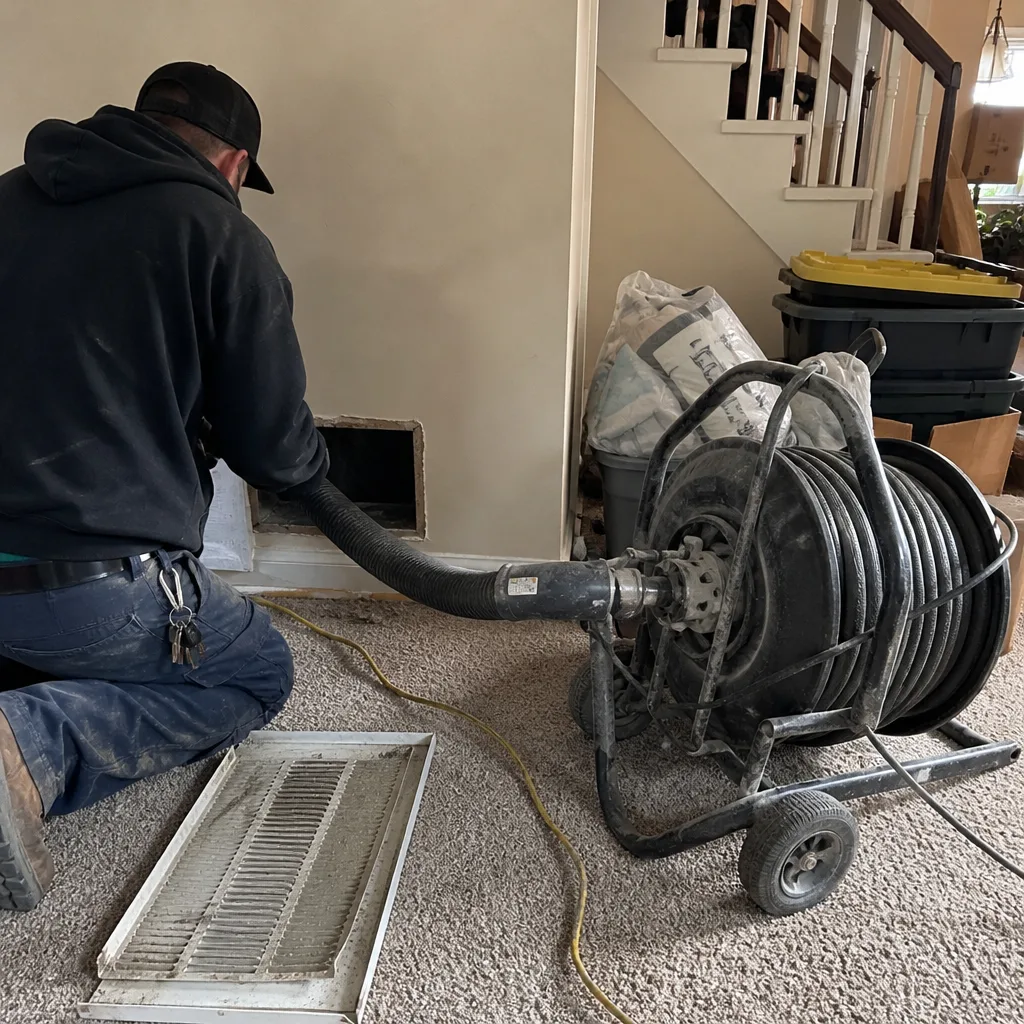 Before
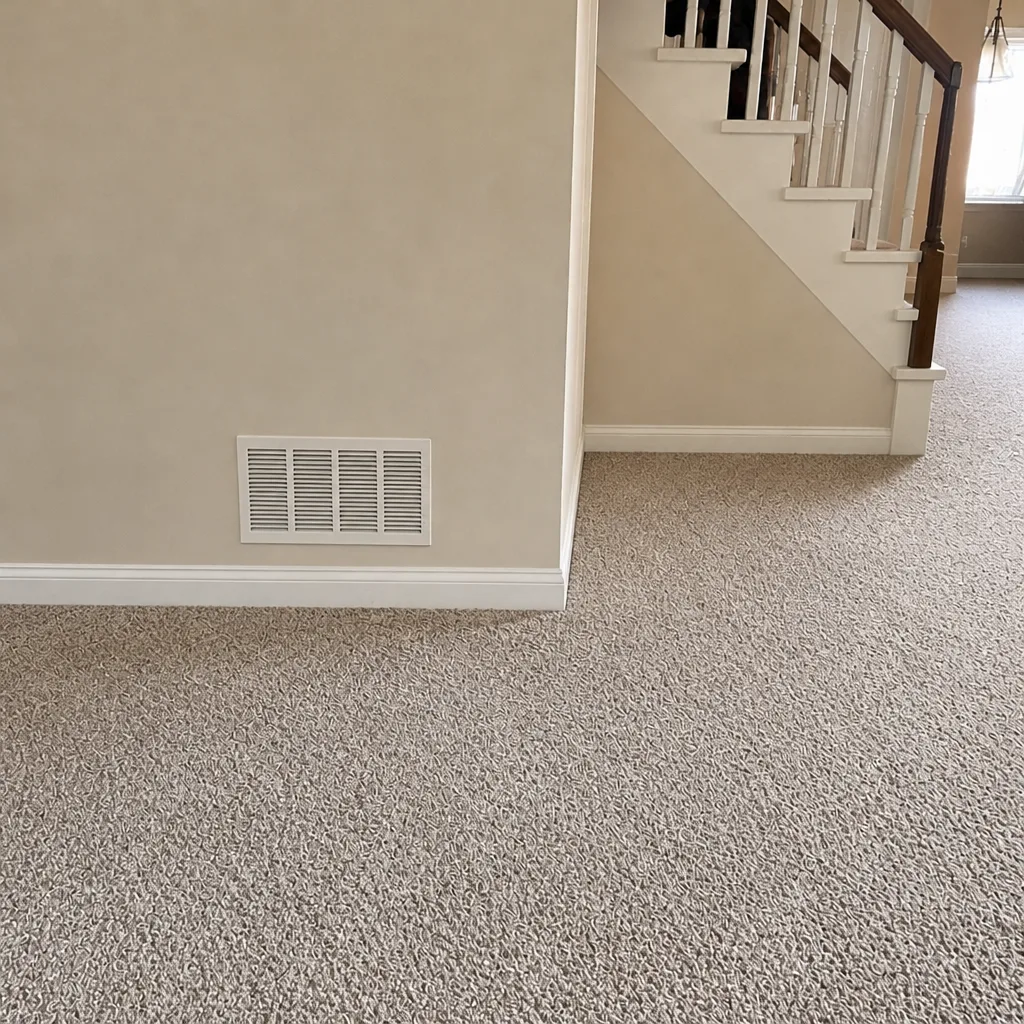 After
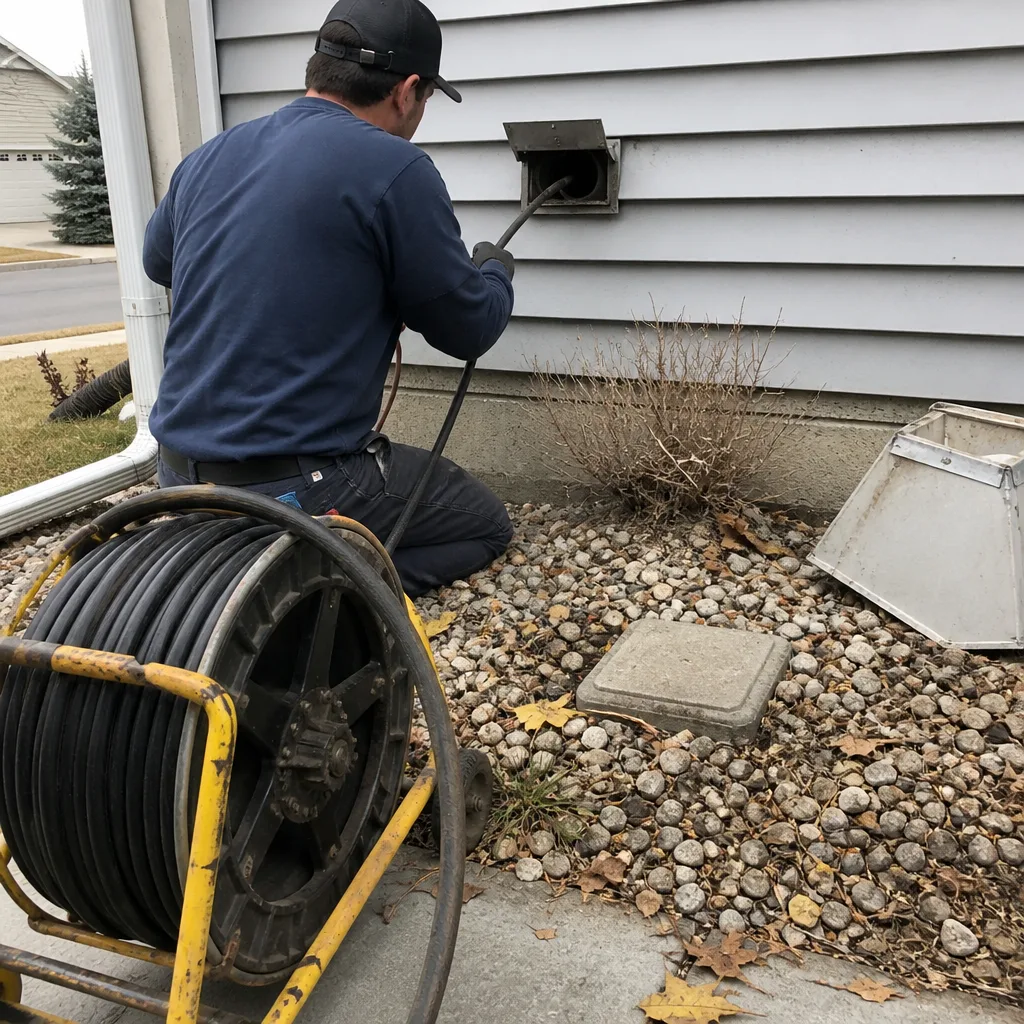 Before
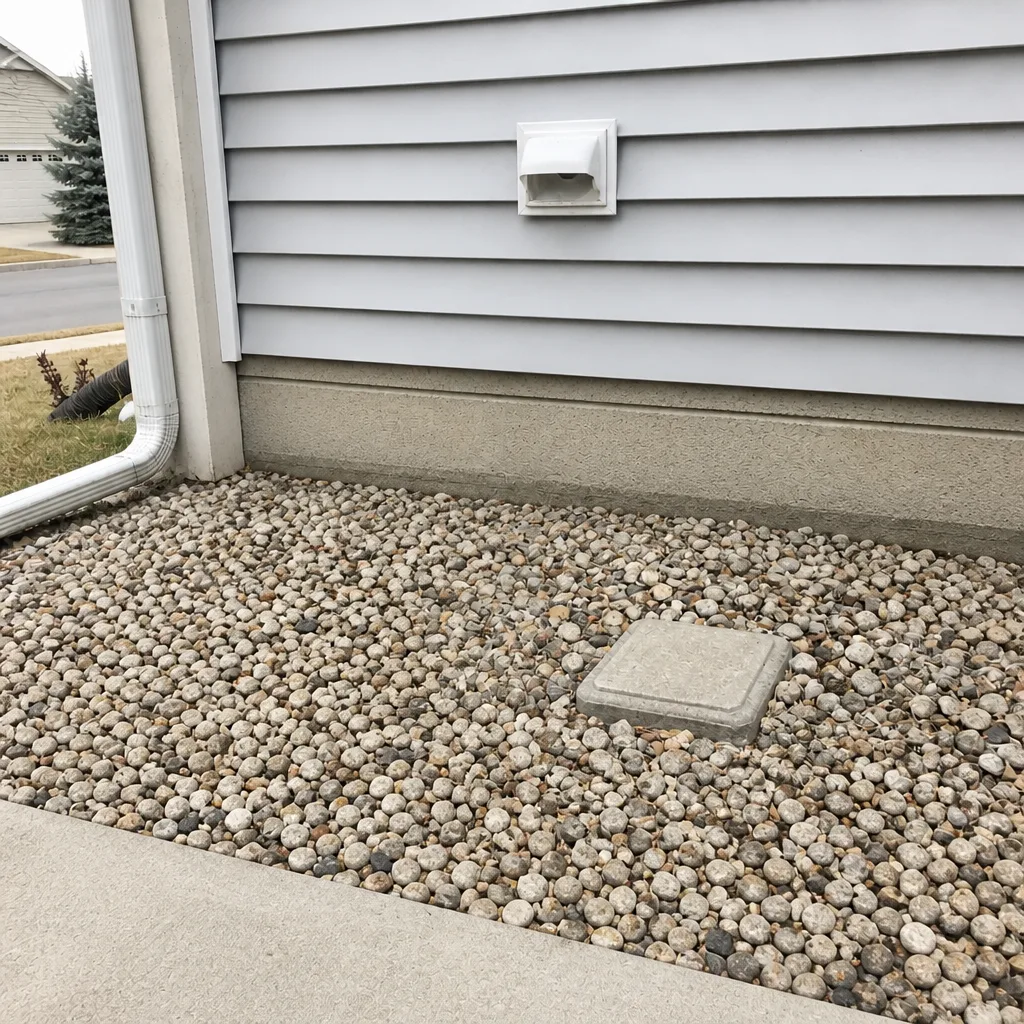 After
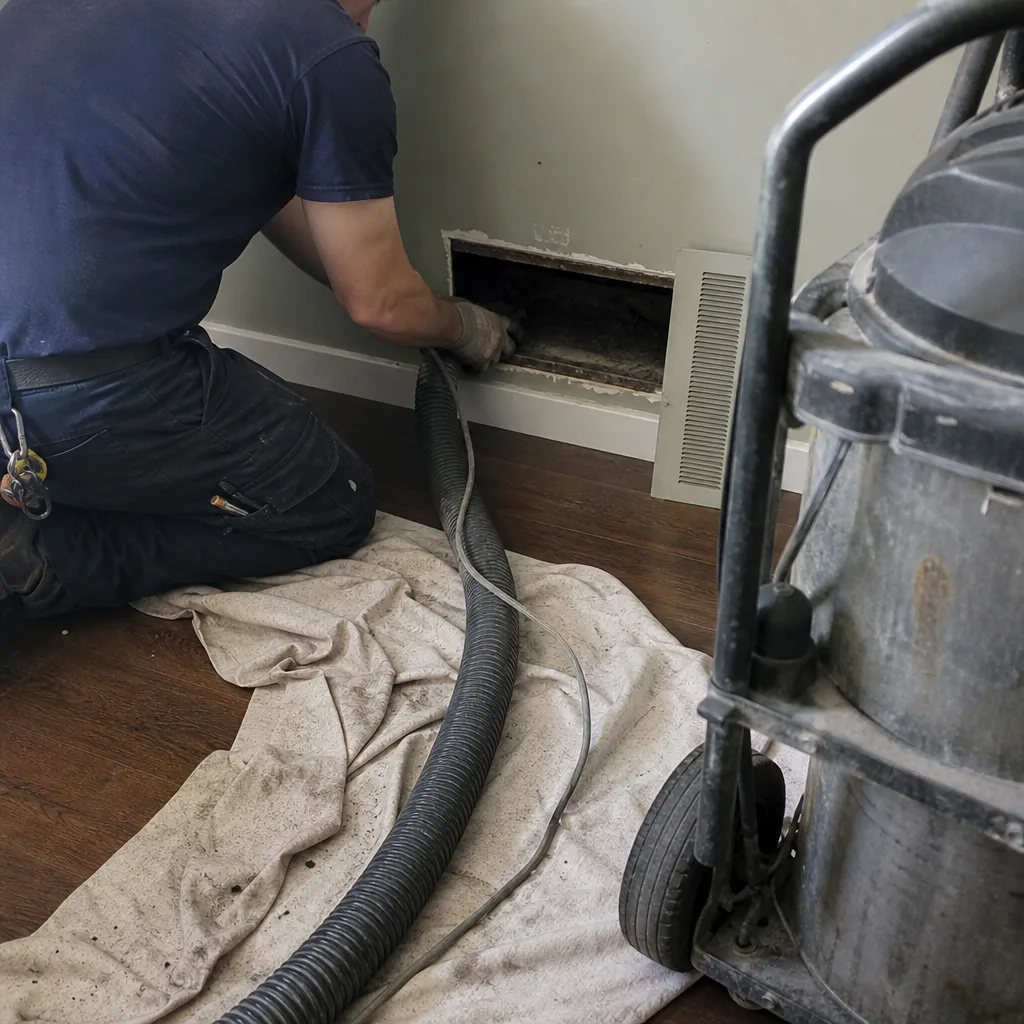 Before
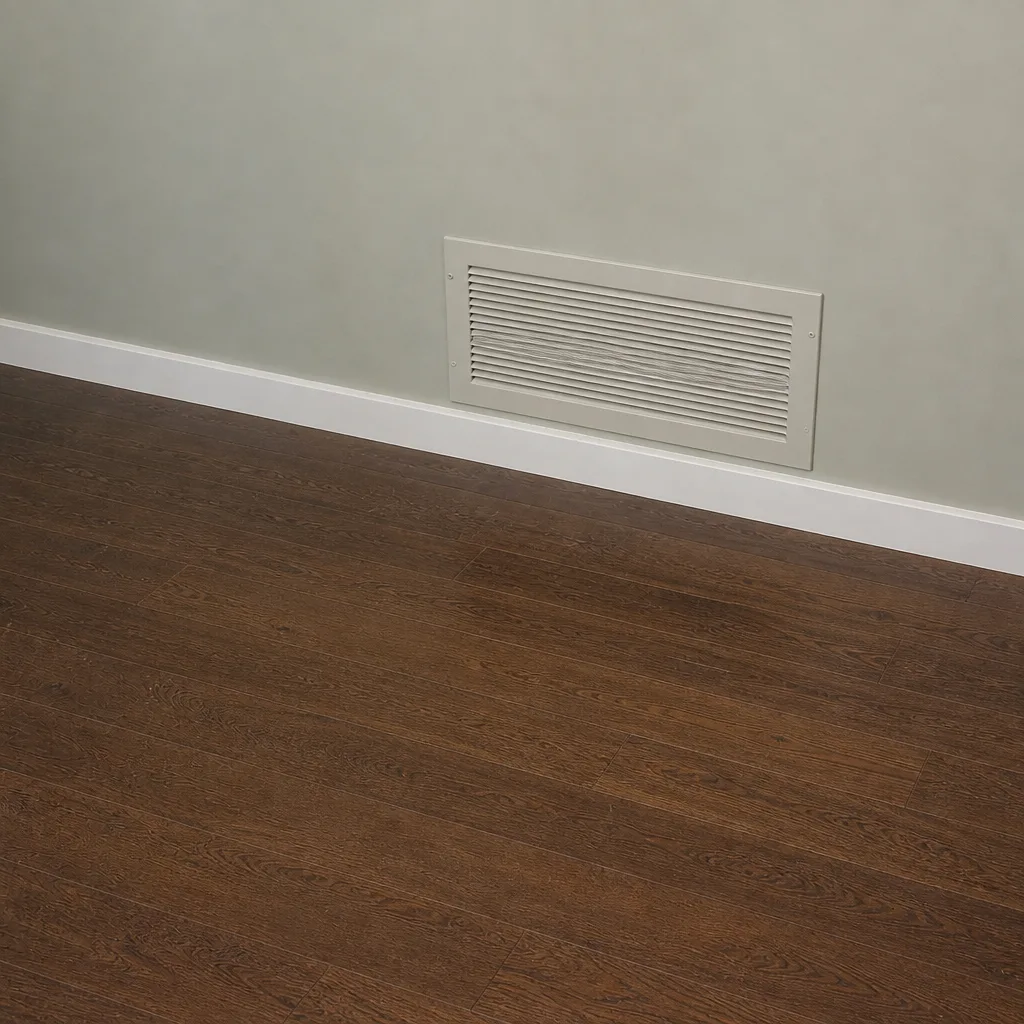 After
When to Call a Professional
Call a professional when your own log stops making sense. If filter loading rate has dropped and won’t recover, if you’ve noticed a breach around a return, if you’ve completed a renovation and the dust hasn’t settled, or if a pet, fireplace, or attached garage is in the mix and the system hasn’t been serviced in over 2 years, it’s time for an inspection. Comfort issues that seem unrelated – hot and cold rooms, weak register airflow, a system that runs constantly and never seems to satisfy – often trace back to a duct problem the checklist will surface but rarely lets you solve alone. Duct Cleaning Meridian offers free estimates in Meridian – call (866) 389-4992. We answer 24/7. Fast dispatch from 7am to 7pm, Sunday through Friday.
Frequently Asked Questions
Every 2-3 years for most homes, but the right interval depends on what your log shows. Pet homes, wood-burning fireplace homes, attached-garage homes, and homes that have gone through recent renovation often need cleaning every 2 years. Homes with no special conditions and steady filter-load intervals can stretch to 3 years or longer.
A filter loading in under 3 weeks without a seasonal cause usually points to restricted airflow or a return-side leak. A leaky return in an attic or garage pulls in more particulate than a well-sealed return. Swapping filters faster doesn’t address the cause – it just adds expense while the underlying duct problem stays in place.
Yes, if you have pets, a fireplace, or an attached garage, and quarterly if you don’t. Return registers are the entry point for the dust that goes on to load your filter. They show visible accumulation first, which means they give you the earliest signal that something has changed in your duct system.
Dry winter air builds static charge, and statically charged dust clings to duct walls and register faces rather than moving through. That means the same amount of dust produces more visible accumulation in the closed-house months. Logging humidity in winter tells you whether the change is static-driven or a real increase in particulate.
Supply registers blow air into rooms and show cosmetic dust or soot film. Return registers pull air back toward the system, and they’re the more critical inspection point because everything entering the return side passes through the blower and coil. Visible debris at a return throat is a stronger signal than any supply register observation.
Not for a real duct job. Shop-vacs capture some debris but recirculate fine particulate back into the room, and they rarely have the airflow to properly dislodge duct-wall accumulation. A serious service uses professional equipment – Rotobrush contact-vacuum systems, Nikro HEPA-rated vacuum, and Abatement Technologies containment – so the dust is captured rather than redistributed into your living space.
Repair comes first. Anything cleaning removes can re-enter through a breach, a disconnected run, or a crushed flex duct within days. Get the duct system sealed and structurally sound, then clean. If you’re noticing a breach during a routine inspection, ask a technician to look at the repair side before booking the cleaning.
The Bottom Line
A duct maintenance checklist is a diagnostic tool, not a maintenance chore. Track filter loading rate, inspect returns more than supplies, log humidity through the winter, and photograph every register once a year. Adjust the schedule for Meridian’s pollen, smoke, harvest dust, and dry winter air rather than the 90-day label on the filter box. Add pets, a fireplace, or an attached garage and the cycle tightens. When the log shows a real change and the filter is just the messenger, call in a professional who can inspect the system, diagnose the cause, and repair what cleaning alone won’t fix. Duct Cleaning Meridian offers free estimates – call (866) 389-4992 for an exact quote.
Written by the team at Duct Cleaning Meridian.