
Last updated November 14, 2026
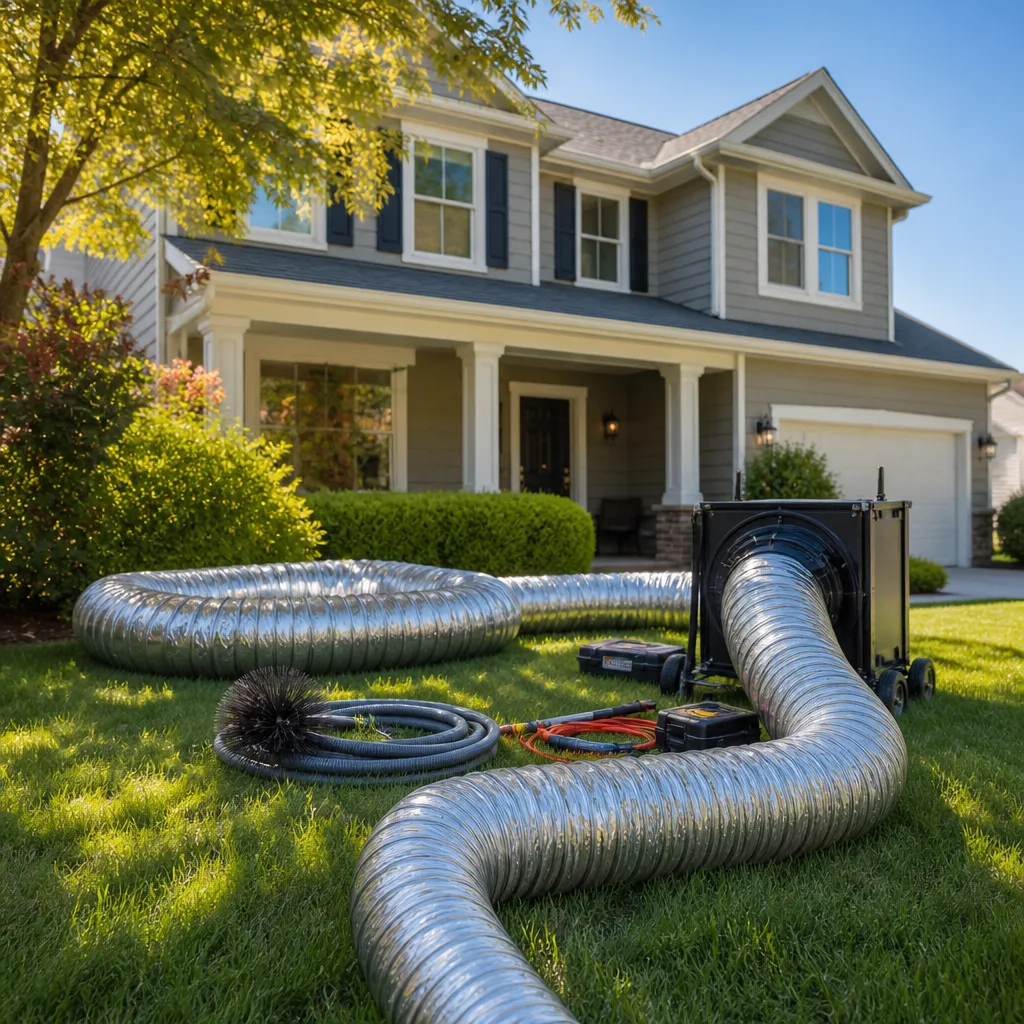 Whole-home duct cleaning
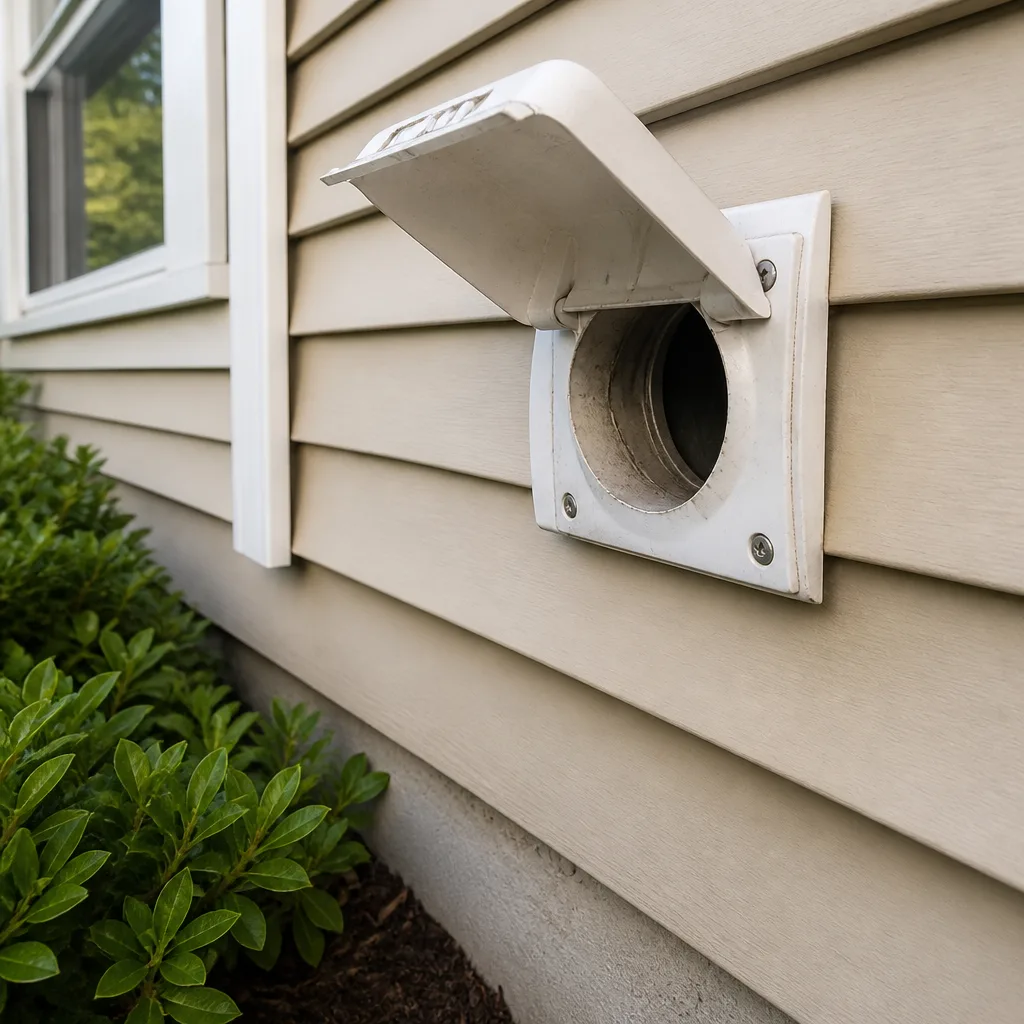 Dryer vent cleaning
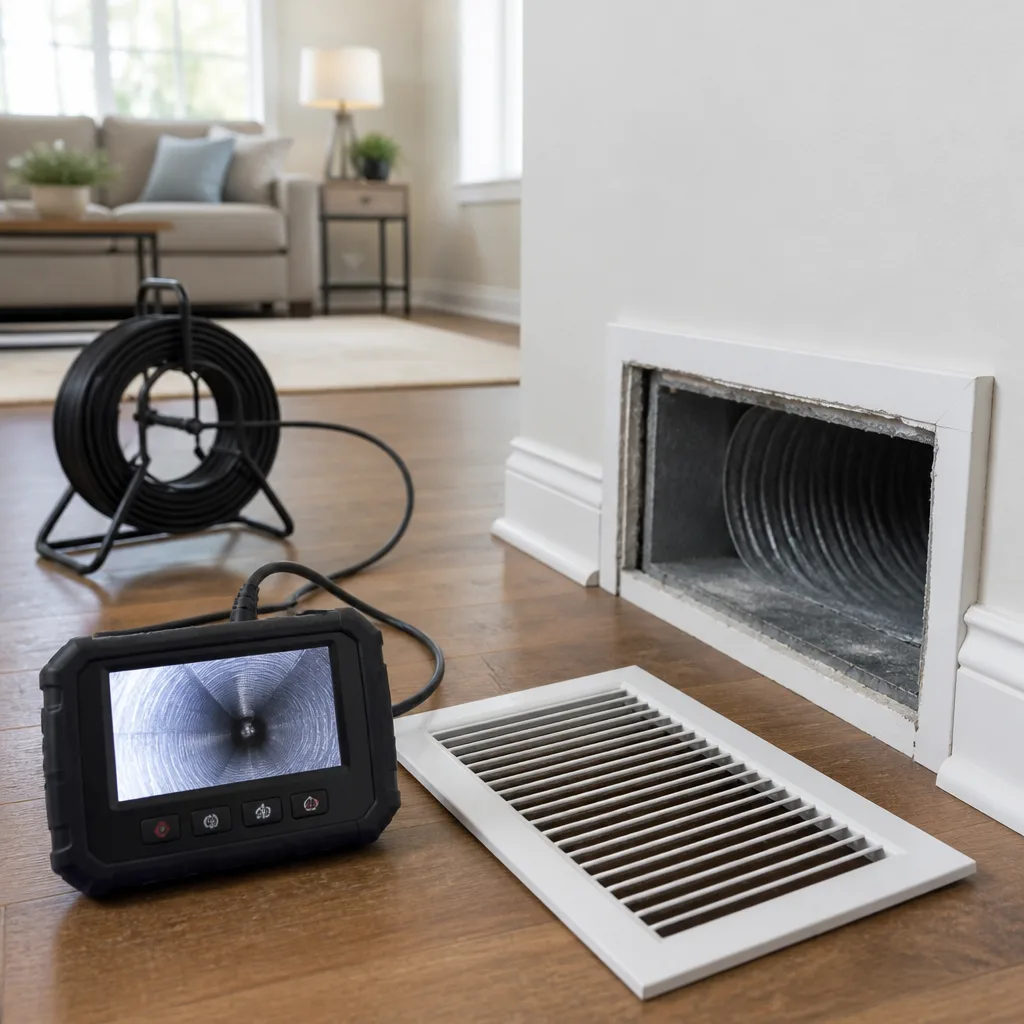 Camera inspection
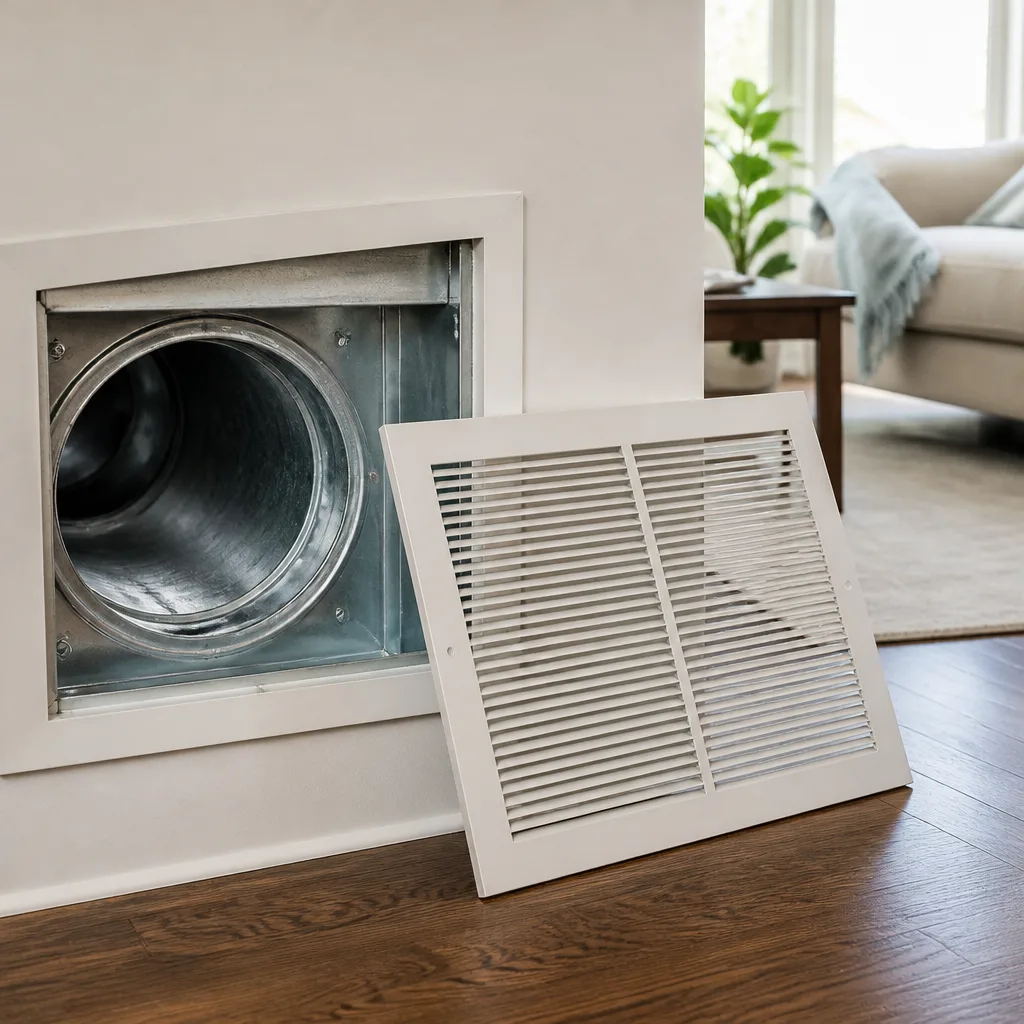 Sanitizing & deodorizing
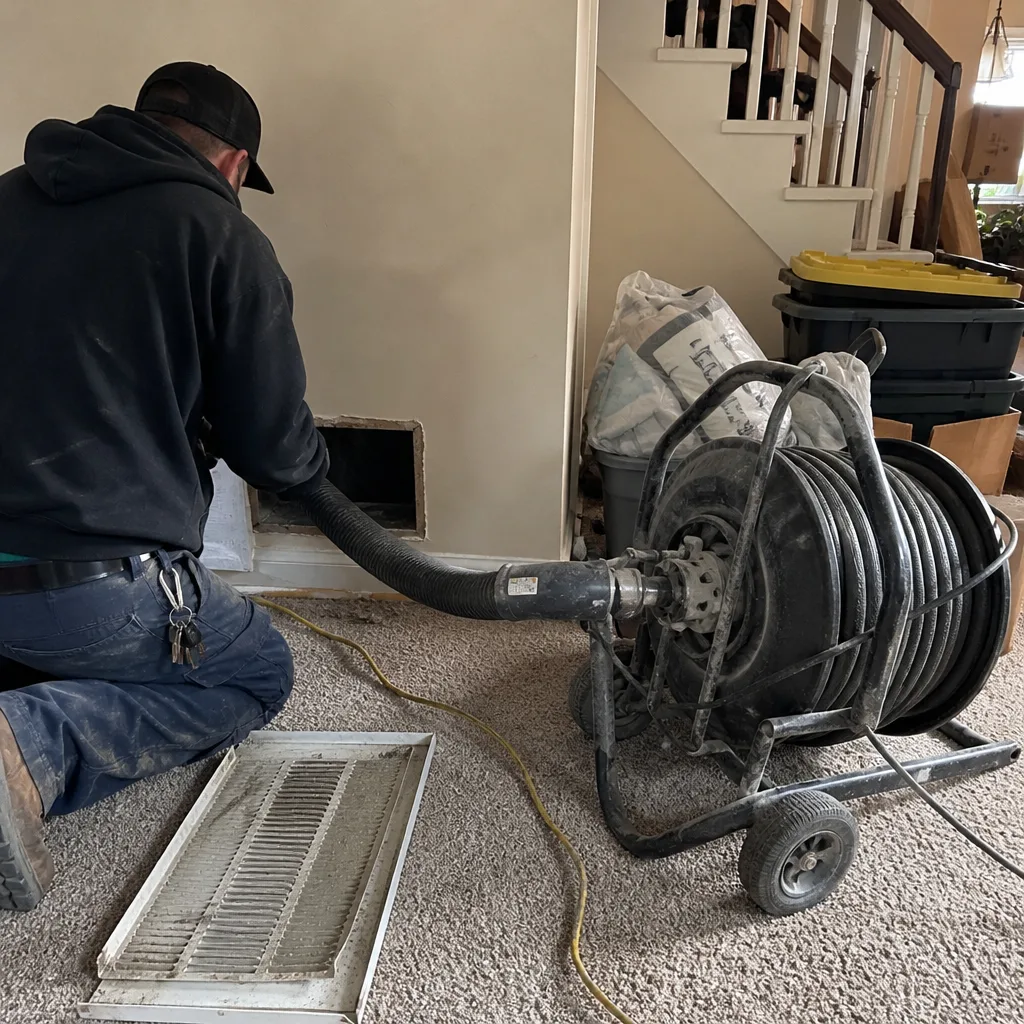
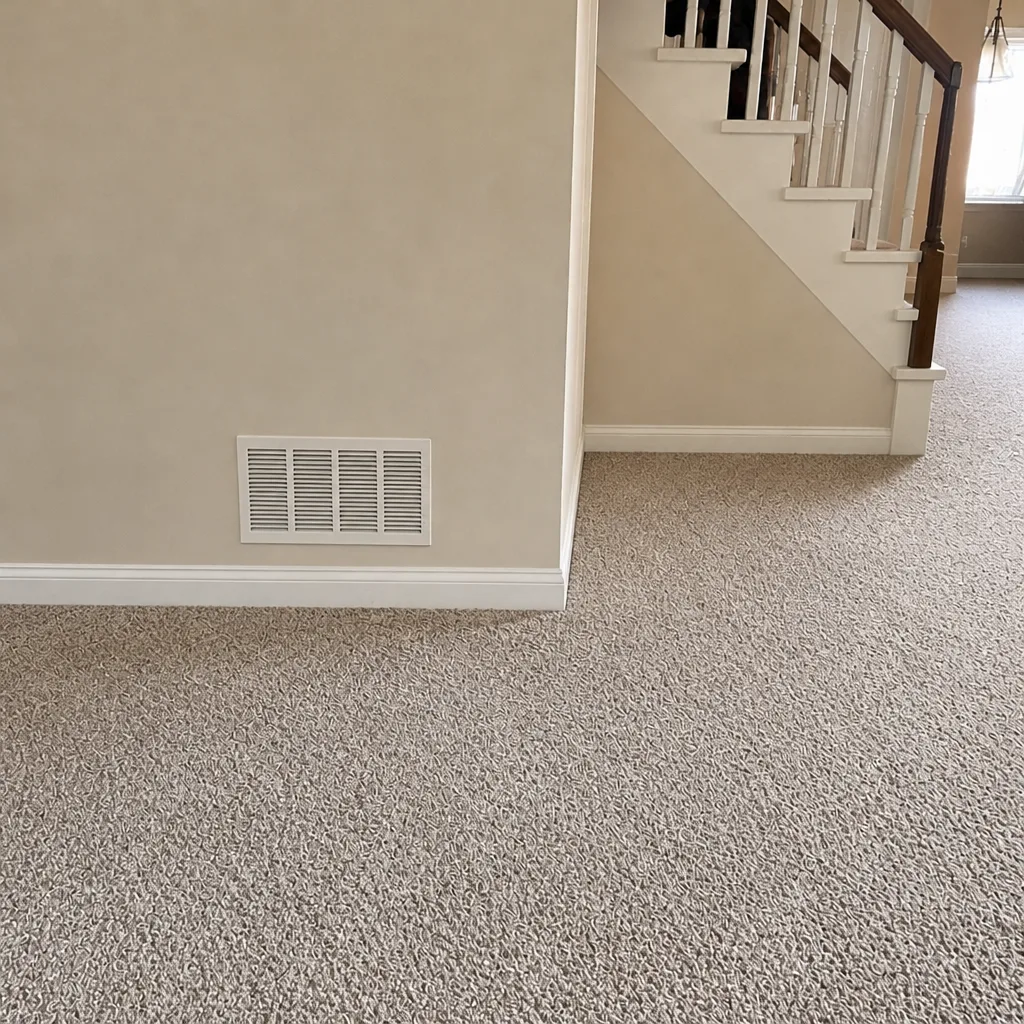
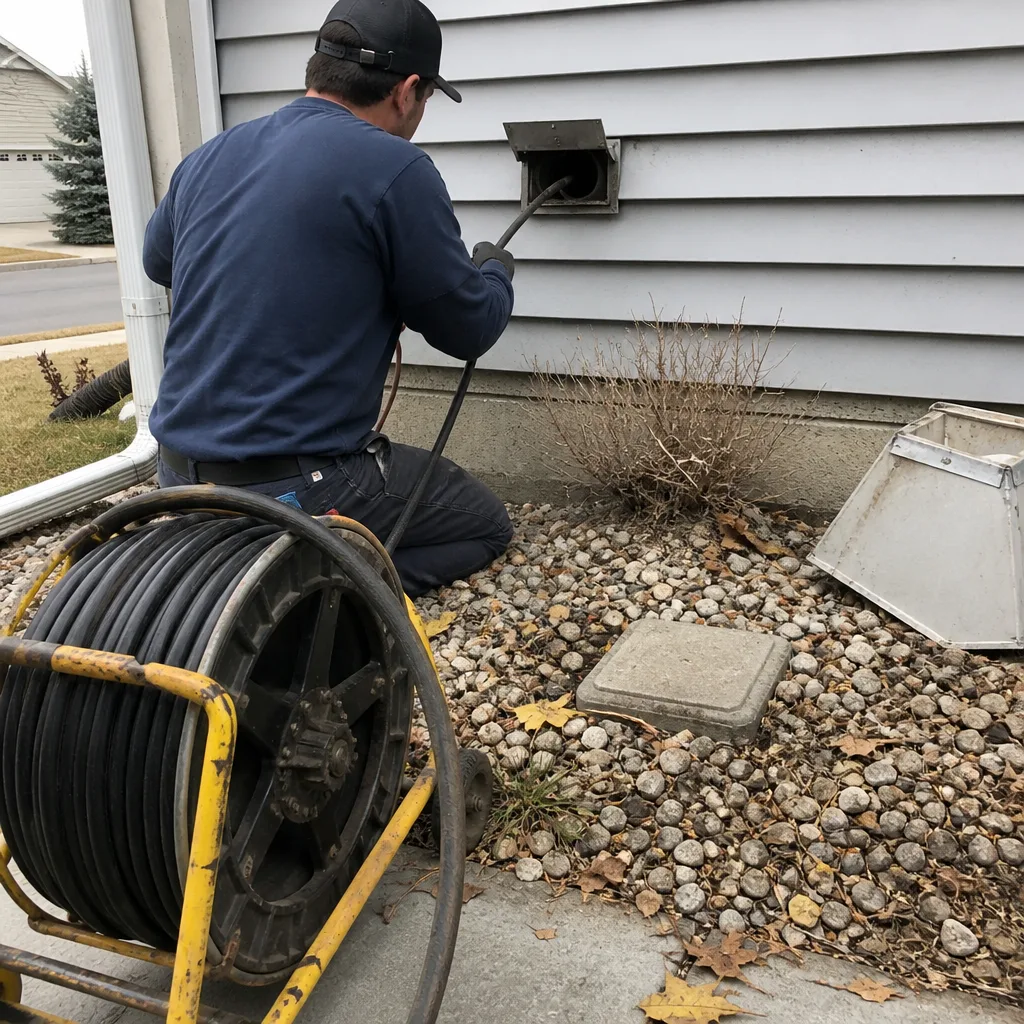
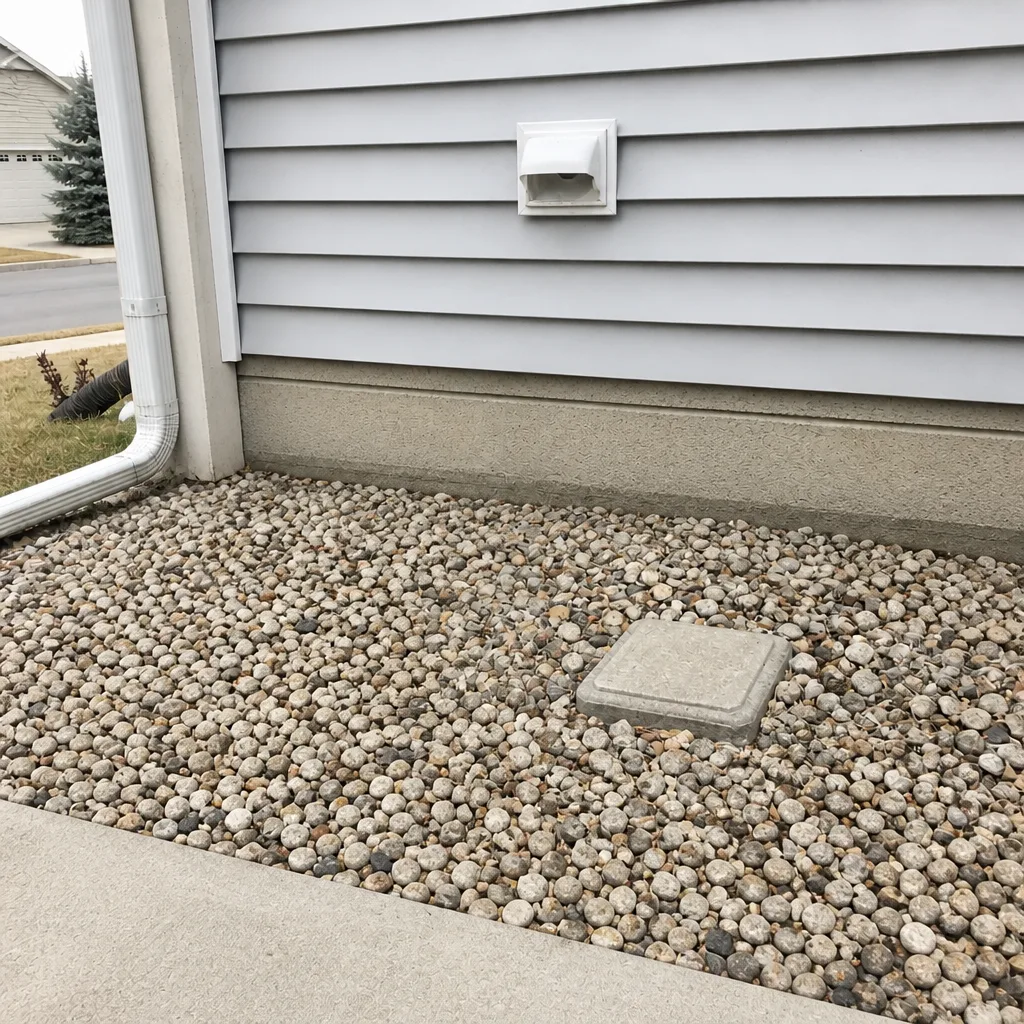
Whole-system duct and dryer vent check with before-and-after photos - you see exactly what came out of your vents
That "$99 whole-house special" is a bait ad - the real number appears once they are in your hallway, or the "clean" is a shop-vac at the register. We photograph the inside of your ducts before and after instead.
Choosing the Right Air Duct Cleaning Brand: A Buyer’s Guide for Meridian
Every air duct cleaning company in the Treasure Valley says the same things. They use “professional-grade equipment.” They “care about indoor air quality.” They’ll get “all the dust out.” The words are identical from one quote to the next, which makes them almost useless when you’re trying to tell a serious operator from a crew with a shop vac and a marketing budget. Here’s the part most homeowners never hear: the equipment manufacturers and model specifications are one of the few claims in this trade you can actually verify. A contractor either owns a Rotobrush, Abatement Technologies or Nikro system, or they don’t. This guide teaches you how to read the hardware, ask the right questions, and match a company’s equipment capability to your specific Meridian home.
Quick Answer
The right air duct cleaning brand for your Meridian home is the one that can name its equipment by manufacturer and model, uses HEPA-rated vacuum collection with real containment, follows source-removal methodology rather than surface wiping, and can repair ductwork faults that cleaning alone won’t fix. In a market where everyone claims professional-grade tools, verifiable equipment names are the clearest signal of technical credibility. Price matters, but a written, whole-system estimate tied to equipment and process is worth more than the lowest quoted number.
Styles & brands we work with
- Whole-home duct cleaning
- Dryer vent cleaning
- Camera inspection
- Sanitizing & deodorizing
Table of Contents
- Why Equipment Names Matter More Than “Professional-Grade” Claims
- Source Removal vs. Surface Contact: What the Difference Actually Means
- Truck-Mounted vs. Portable: What Fits Your Meridian Home
- How to Match Equipment Capability to Your Home’s Size and Layout
- Questions to Ask About Vacuum Filters, Maintenance and Certification
- How to Verify a Contractor’s Equipment on the Job Sheet
- Why Cleaning Isn’t Enough if the Ductwork Is Broken
- The Dryer Vent Question Every Buyer Should Ask
Why Equipment Names Matter More Than “Professional-Grade” Claims
The phrase “professional-grade equipment” appears on nearly every air duct cleaning website in the country, including some that arrive with nothing more than a wet-dry vacuum and a length of hose. Because the phrase is unregulated, it tells you nothing. Equipment brand names are different. When a contractor tells you they use a Rotobrush contact-vacuum system, they’re naming a North American manufacturer whose products are purpose-built for duct agitation and extraction. When they mention Nikro, they’re naming a company whose HEPA-rated filtration systems are specified for jobs where captured particulate must not recirculate into the living space. Those names mean something because they can be checked.
Three manufacturers dominate the professional segment: Rotobrush, Abatement Technologies and Nikro Industries. Together they appear in the training and technical literature that supports the National Air Duct Cleaners Association (NADCA), the trade body that sets the recognized standard for how residential duct cleaning should be performed. That’s not a coincidence. Serious operators gravitate to the same tools because those tools solve the same physical problems: loosening compacted debris, capturing it, and getting it out of the building without contaminating the rooms the ductwork serves.
For Meridian homeowners, this is the practical takeaway: ask the equipment question on the first call, before you get a quote. If the person on the other end can’t tell you which manufacturer’s system they run, that silence is your answer. A trade professional who has invested in professional equipment usually knows exactly what it is. Our technicians run Rotobrush contact-vacuum systems for agitation and extraction, Nikro HEPA-filtered vacuums for capture, and Abatement Technologies source-capture equipment for containment, and we can name every one of them. If you’re comparing quotes around Meridian, keep that standard in front of you.
Source Removal vs. Surface Contact: What the Difference Actually Means
There are two broad approaches to duct cleaning, and the gap between them matters far more than most homeowners realize. Surface-contact cleaning wipes or vacuums the visible portions of ductwork, mostly around registers and accessible plenum areas. It can make a system look cleaner. Source-removal cleaning, the NADCA-standard methodology, is designed to agitate and extract the accumulated debris from the full length of the duct system, including the parts you can’t see, and to do so under negative pressure so the contamination is pulled out of the home rather than distributed through it.
Whether that distinction matters in your home depends on what kind of contamination you’re dealing with. In Meridian’s dry, high-desert summers and cold winters, duct systems tend to accumulate fine dust, pet dander, construction debris from nearby subdivisions, and the general residue of a home that’s been closed up for months at a time. Those are the contaminant types that surface cleaning handles worst, because they settle deep in the trunk lines and branch runs where a wand never reaches.
Source removal addresses that in three stages:
- Agitation. Mechanical brushes or air whips loosen compacted debris from duct walls along the full run.
- Extraction. A high-capacity vacuum, connected to the system under negative pressure, pulls the loosened debris out.
- Containment. Source-capture equipment at the work area contains dislodged material so it doesn’t settle into the living space during the process.
We build our process around all three because they fail in sequence. Agitate without extraction and you just make dust airborne. Extract without containment and some of what you’ve loosened ends up on your furniture. If a company you’re considering can describe their agitation method and their containment setup without prompting, you’re on the right track. If they can’t, ask what “source removal” means to them and see whether the answer lines up with what you just read. That one question separates operators faster than any review page.
Truck-Mounted vs. Portable: What Fits Your Meridian Home
Truck-mounted vacuum systems typically deliver more sustained airflow and greater vacuum capacity than portable units, which matters because airflow is what actually moves debris out of a duct run. For most Meridian homes, which are predominantly single-family houses with moderate-length duct runs and finished basements or crawlspaces, a truck-mounted system is the better match. It can hold negative pressure across the whole system, handle longer trunk lines without dropping suction, and remove volumes of material that a portable vacuum would take far longer to clear.
Portable systems aren’t automatically bad. They’re the practical choice in specific situations:
- Condos and townhomes where a truck can’t park close enough to the access point for an effective hose run.
- Homes with tight lot access or unusual equipment positioning.
- Small, compact systems where duct runs are short and total volume is low.
What matters is that the company has the right tool for your configuration and says so openly. A contractor who only owns a portable unit and applies it to every job in Meridian will struggle with a 2,500-square-foot home with a long trunk run. A contractor who owns both and matches the equipment to the job has made a real investment in capability. Ask a simple question on the phone: “Do you use a truck-mounted or portable system, and why would you choose one over the other for my home?” The answer will tell you a lot about how that company thinks.
How to Match Equipment Capability to Your Home’s Size and Layout
Meridian’s housing stock runs from older single-family homes near downtown to newer builds in the subdivisions spreading toward Ten Mile and the areas around the Idaho Center. Duct systems vary more than the homes do, which is why a single standard equipment package isn’t always enough. Here’s a straightforward way to evaluate whether a company’s tools fit your house.
- Count your supply and return registers. A home with 15 or more supply registers has a substantial system and benefits from higher-capacity vacuum equipment.
- Identify your system type. Rigid metal ductwork, flex duct, and older duct board each respond differently to agitation. Ask whether the company’s brush or whip setup matches your duct material.
- Note the number of HVAC zones. Multi-zone systems require cleaning each zone’s trunk and branch runs separately, and that takes more time and capacity than a single-zone home.
- Check access. If your home has limited attic or crawlspace access, ask what equipment the company uses for tight spots and whether it can still maintain containment in a constrained work area.
- Bring up any known issues. If you’ve seen dust streaks at the registers or hear a rattle in a branch run, mention it before the estimate. That’s often the difference between a cleaning and a repair call.
We walk every Meridian home through this checklist before we compose an estimate, because the equipment decision and the price flow from the same information. A written estimate that doesn’t reflect your register count, system type and access situation is a guess dressed up as a quote.
Questions to Ask About Vacuum Filters, Maintenance and Certification
The vacuum is only as good as its filter. A HEPA-rated filter captures fine particulate, including dust and dander that would otherwise pass through the vacuum and back into the air. A vacuum with a degraded or incorrectly installed filter that pulls the same material into the home defeats the entire purpose of the job. This is the detail that separates serious operators from low-cost providers, and it’s almost never mentioned in the sales pitch.
Ask these questions before you book:
- What filtration rating does your vacuum collection system use?
- How often are filters replaced or cleaned, and is that done between jobs?
- What happens to captured debris after the job finishes, and how is it removed from the property?
- Can you show me the filter setup when you arrive?
Nikro HEPA-filtered vacuums and Abatement Technologies source-capture systems exist precisely because containment is a technical requirement, not a marketing paragraph. Our teams use those systems routinely and we’re happy to talk about filter ratings and maintenance intervals on the first call. If a company can’t answer these four questions without reaching for a script, that tells you how much of the process they’ve thought through. In a market where every contractor says “professional-grade,” the filter question gets to the truth faster than anything else.
How to Verify a Contractor’s Equipment on the Job Sheet
You don’t have to trust what you’re told over the phone. The job sheet is where equipment claims either hold up or fall apart, and it’s yours to read before work begins. A serious operator’s written scope of work will name the equipment and describe the process, in the same document that lays out the flat price for the system.
Look for these elements on the paperwork:
- Equipment names. The specific manufacturer or product line of the vacuum and agitation tools.
- Process description. Agitation, extraction and containment listed as distinct steps, not summarized as “clean all ducts.”
- Register count. The number of supply and return registers covered by the estimate, so there is no per-vent surprise once the technician is in your home.
- Before-and-after documentation. A commitment to photograph your ducts before and after cleaning so you can see the difference.
- One price for the system. A flat number agreed before work starts, not a teaser and an upsell after arrival.
This is exactly how we structure our estimates, because the bait-and-switch reputation this trade has earned is real and the only way to answer it is to put the price and the equipment on the same page and stand behind both. If you’re comparing companies in Meridian, ask each one to put these five items on the estimate. The differences will be obvious.
Why Cleaning Isn’t Enough if the Ductwork Is Broken
Here’s a scenario that catches homeowners regularly. A duct run has disconnected at a joint, a section of flex duct has collapsed, or a branch has pulled loose from its boot. Cleaning that system does two things: it improves the parts that are intact, and it pushes air (and any remaining debris) into the wall cavity or attic instead of the room. Cleaning alone cannot fix a breach, and most cleaning-only companies don’t have the capability to diagnose one, let alone repair it.
Full-scope duct service should include the ability to inspect the system, identify disconnected or degraded sections, and repair them. That’s why our work covers both cleaning and repair under the same trained technicians. When we’re on a job and find a disconnected run, we show the homeowner and explain what a repair involves before doing anything. No surprise scope additions, no separate dispatch to a different contractor.
For Meridian homes with crawlspaces or attic runs exposed to summer heat and winter cold, duct connections take a beating. Temperature swings stress the joints. If you’ve noticed rooms that never seem to get the airflow your system should deliver, or a persistent dust issue that comes back weeks after cleaning, a disconnected duct is one of the first things worth checking. That diagnostic step is what separates a full-service indoor air quality specialist from a one-service cleaner.
The Dryer Vent Question Every Buyer Should Ask
Dryer vent cleaning is often treated as an add-on by air duct cleaning companies, tacked on at the end of a service call as an upsell. It shouldn’t be. Lint accumulation in a dryer vent is a documented fire hazard, and the National Fire Protection Association (NFPA) tracks dryer fires as a recurring residential risk. A clogged vent restricts airflow, pushes the dryer to run longer and hotter, and creates a condition where accumulated lint can ignite.
Given that, the question to ask a duct cleaning company isn’t only whether they clean dryer vents. It’s whether they treat dryer vent cleaning as a dedicated service with the same equipment and attention as duct cleaning, and whether the technician who cleans your ducts also handles the vent. If you’re booking a service, knowing that the same trained technician handles both means you’re not handing off to a subcontractor with a different process and a different standard.
Our dryer vent service exists as its own line of work precisely because it addresses a safety concern that doesn’t belong in a “while we’re here” conversation. We clean it. We repair it. We clear the dryer vent. If you can’t remember the last time your vent was professionally cleared, that alone is reason enough to have it looked at when we’re in Meridian.
Common Mistakes to Avoid
- Accepting “professional-grade equipment” without asking for a manufacturer name. Every company claims the phrase. Only a real operator can name the tool. Ask on the first call.
- Choosing on price alone. The lowest quote in Meridian is often the one that doesn’t include containment, uses portable equipment on a full-size home, or quotes a teaser and increases the invoice on site. Price in context is a signal; price alone is not.
- Skipping the filter question. A vacuum without a functioning HEPA filter can blow fine particulate back into your living space. Ask about the filter rating and maintenance, and don’t accept vague answers.
- Assuming cleaning fixes everything. If your ductwork is disconnected, collapsed or degraded, cleaning alone leaves the real problem in place. Ask whether the company offers duct repair alongside cleaning.
- Treating dryer vent cleaning as an afterthought. Lint buildup is a real fire hazard. If a company only offers it as a thrown-in upsell, find one that treats it as its own service.
- Not asking for before-and-after photos. You should be able to see what was removed. Our process includes photos of your own ducts; any serious operator should offer the same.
- Ignoring the estimate’s scope. A quote that doesn’t specify register count, equipment and containment is a number without a plan. Ask for a written, whole-system estimate before you book.
See the difference
 Before
 After
 Before
 After
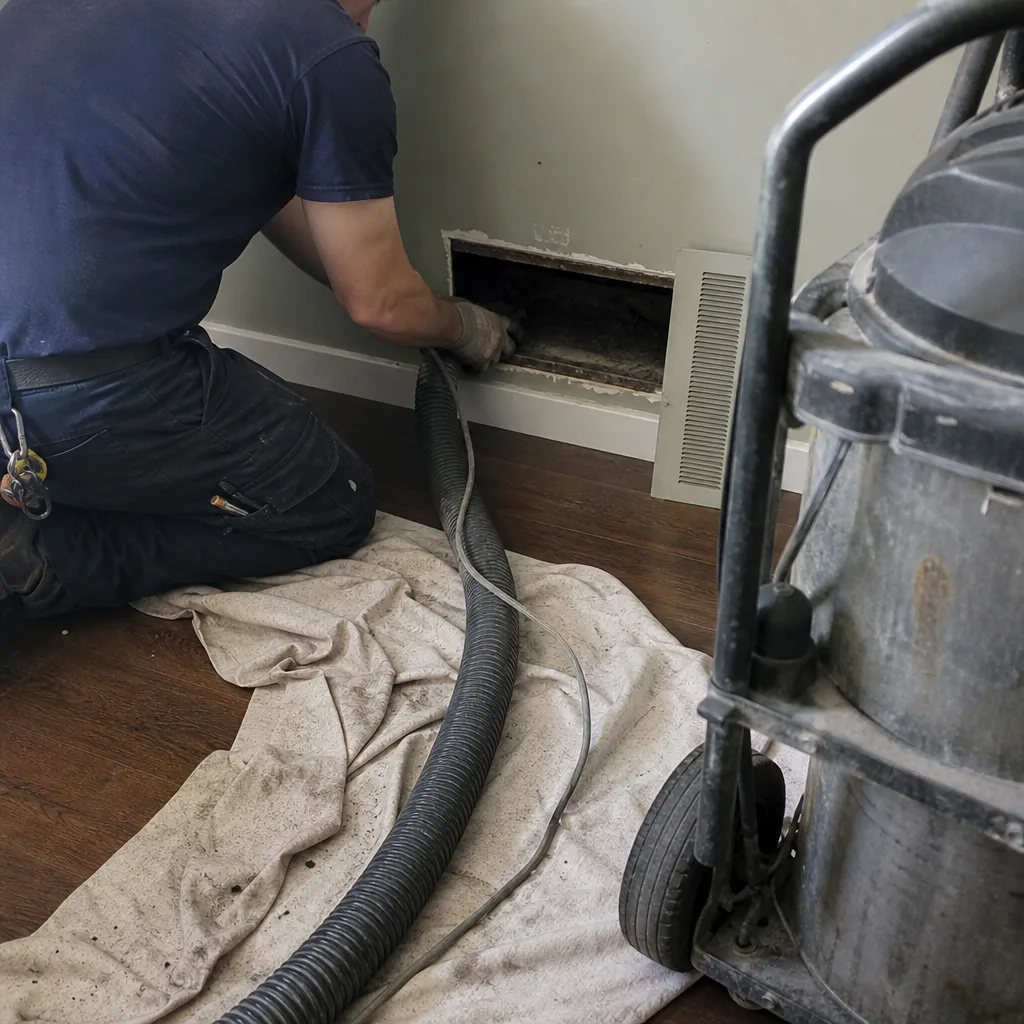 Before
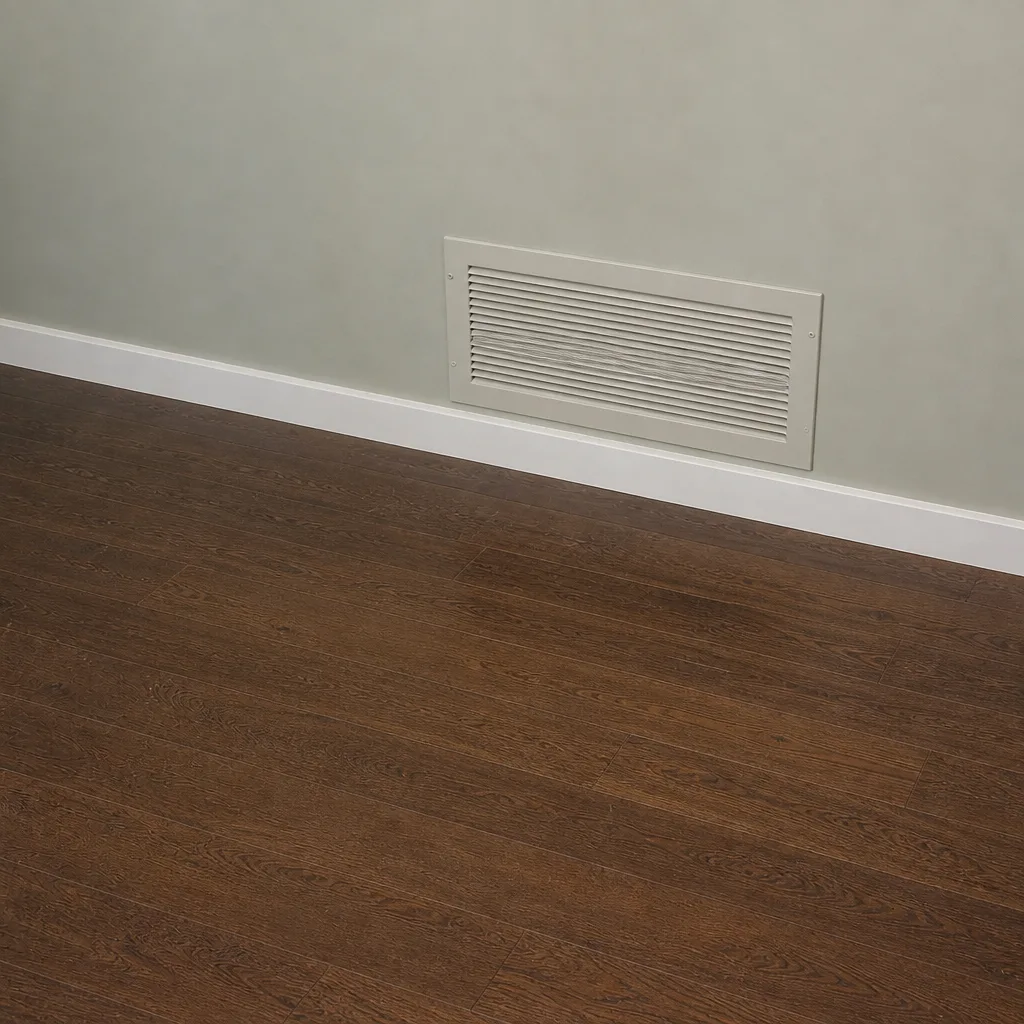 After
When to Call a Professional
Duct cleaning isn’t something you need to do on a fixed schedule, but there are clear signals it’s time. If you’ve recently completed a renovation or a move-in clean-out and dust keeps settling back within days, if a family member has allergy symptoms that flare up indoors, if you have pets and the registers look dark, or if your system hasn’t been serviced in years, a professional assessment is worth the call. Similarly, if a dryer takes longer than it used to, or you’ve never had the dryer vent cleared, that’s a fire-safety issue rather than a convenience one. Duct Cleaning Meridian offers free estimates in Meridian. Call (866) 389-4992. We answer 24/7, with fast dispatch from 7am to 7pm, Sunday through Friday. Estimates are free, and the written estimate sets the final price. To start learning what a professional process looks like, spend a few minutes on our air duct cleaning page.
Frequently Asked Questions
Ask for the manufacturer name of the vacuum and agitation system on the first call. Rotobrush, Nikro and Abatement Technologies are the equipment names you’ll hear from credible operators, and a serious company will answer without hesitation. If the answer is “professional-grade” with no manufacturer, ask again. Ask them to list the equipment on the written estimate too, so it’s on the record. Call (866) 389-4992 for an exact quote, and we’ll walk you through what we use on your system.
There’s no single price that fits every home, because the equipment and time required depend on your register count, system layout and duct material. The most important number on any quote isn’t the headline price, it’s whether the price is for the whole system and agreed in writing before work starts. Watch out for per-vent pricing and coupon teasers that expand after the technician arrives. Call (866) 389-4992 for a free estimate that’s tied to your actual system, and we’ll put the whole-system price in writing.
Cheaper quotes usually cut something the customer can’t see: containment, filter ratings, agitation quality, or the number of registers actually covered. A crew using consumer-grade vacuums with no containment and a per-vent pitch can quote far less than a company bringing HEPA-filtered collection systems and source-capture equipment. Neither price is dishonest, but only one of them includes the process. Ask what the cheaper quote leaves out. Call (866) 389-4992 for an exact quote with all of it included.
Ask for before-and-after photos of your own ducts and look at what came out of the system. A serious operator will document the process, including the containment setup and the equipment used, and will show you the result before packing up. Ask what the technician will photograph before work starts, so you know what you’ll receive. Call (866) 389-4992 for an exact quote and a clear description of what we document.
Most homes don’t need cleaning on a fixed calendar. The right interval depends on pets, allergy concerns, recent renovations, and whether the home has been closed up through Meridian’s hot summers and cold winters. If you’ve noticed that dust returns quickly after cleaning, or a room that never gets proper airflow, the problem may be a duct connection rather than a cleaning interval. Call (866) 389-4992 for a free estimate, and we’ll help you assess what your home actually needs.
Yes, the same trained technicians handle both air duct cleaning and dryer vent cleaning, along with air duct repair, so you’re not handing the job to a subcontractor. That matters because dryer vents are a fire-safety concern and shouldn’t be treated as an afterthought. If you’re ready for a full assessment of both, call (866) 389-4992. For homes around Meridian, we’re glad to talk through what each service involves before you book.
The Bottom Line
The right air duct cleaning brand for your Meridian home is the one whose equipment claims you can verify. Ask for manufacturer names. Ask about HEPA filtration and containment. Ask whether the company offers repair alongside cleaning. Ask for a written, whole-system estimate with a flat price agreed before work starts and before-and-after photos included. In a market where every contractor says “professional-grade,” those questions do more work than any review score. If you want a straight answer to all of them, we’re happy to have the conversation.
If you’re ready to move forward, the simplest next step is a call. Duct Cleaning Meridian offers free estimates, uses Rotobrush, Nikro and Abatement Technologies equipment on every job, and works alongside trusted IAQ systems from Honeywell and Aprilaire. Call (866) 389-4992. We answer 24/7. Fast dispatch from 7am to 7pm, Sunday through Friday. Our technicians have up to 12 years of experience, and the price is set by the written estimate so you know exactly what you’re agreeing to.
Written by the team at Duct Cleaning Meridian.