
Last updated November 14, 2026
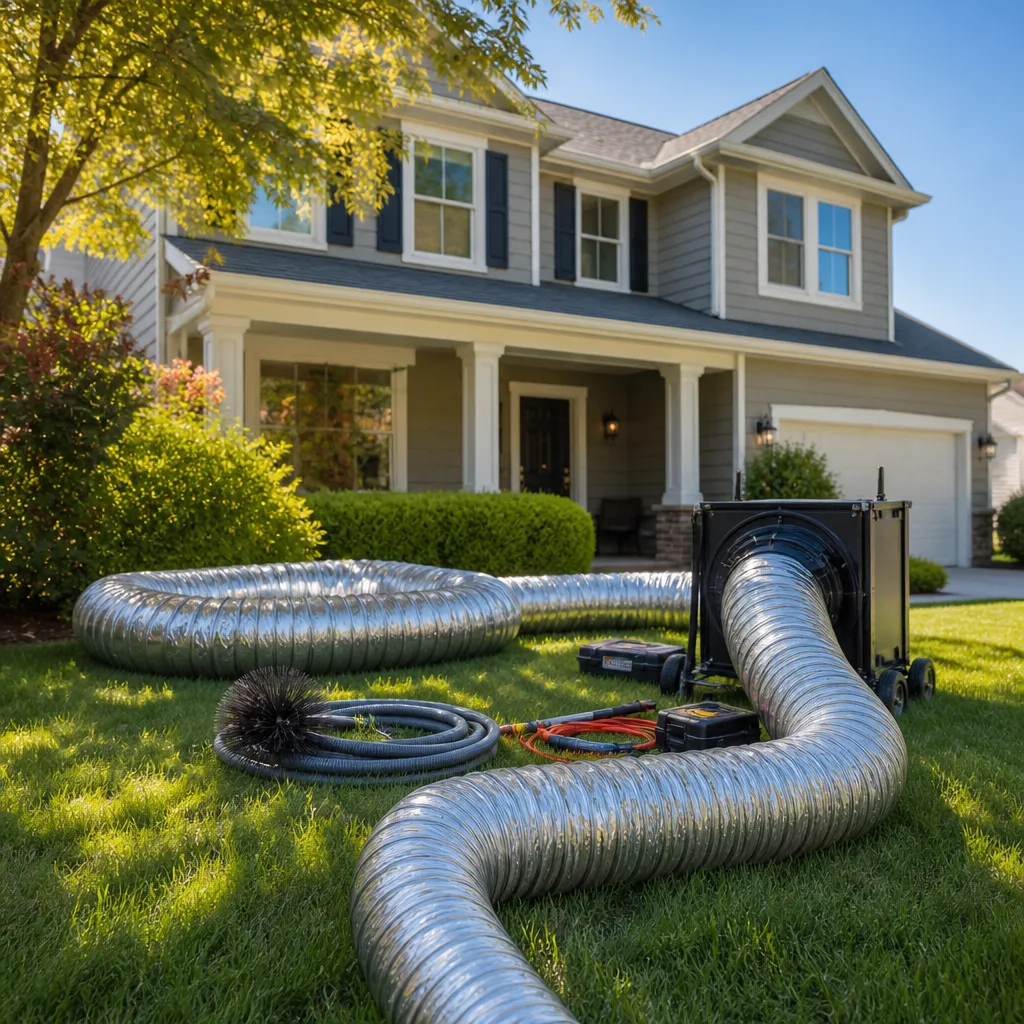 Whole-home duct cleaning
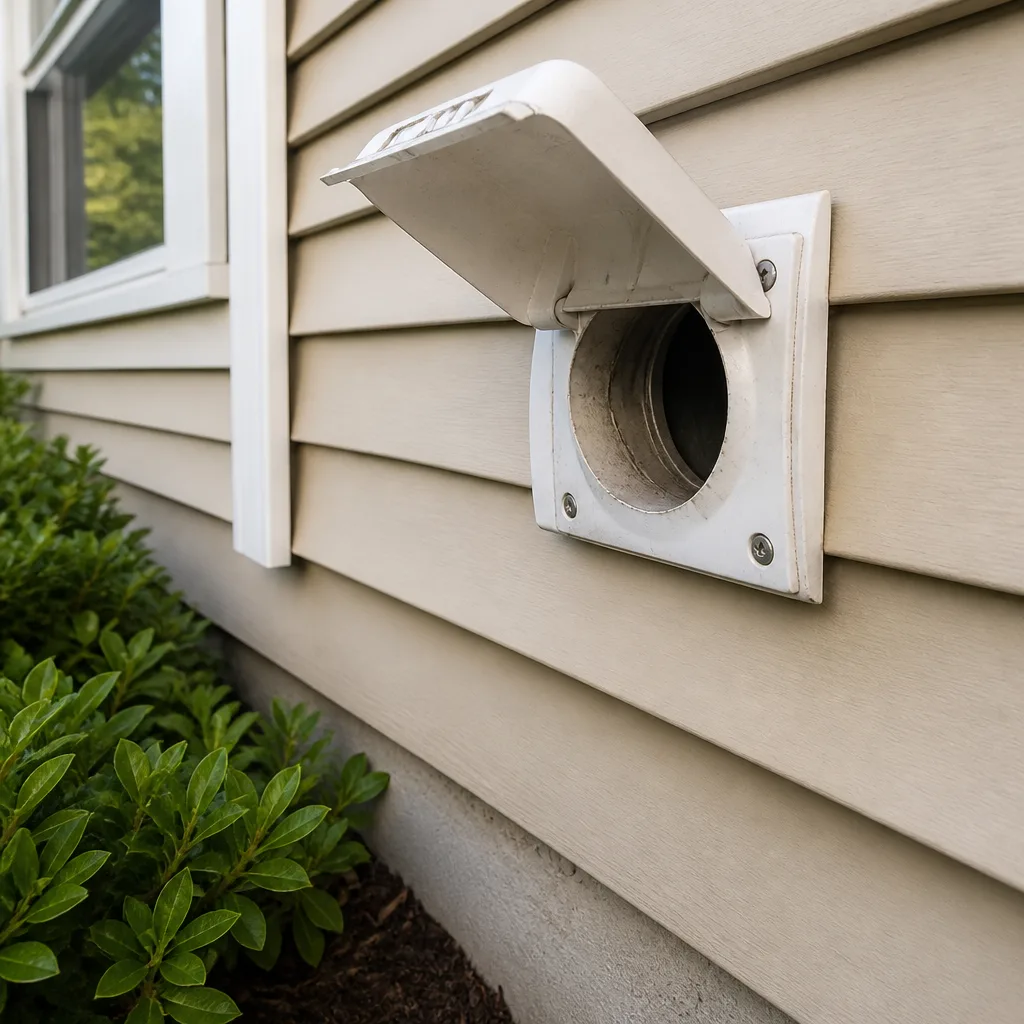 Dryer vent cleaning
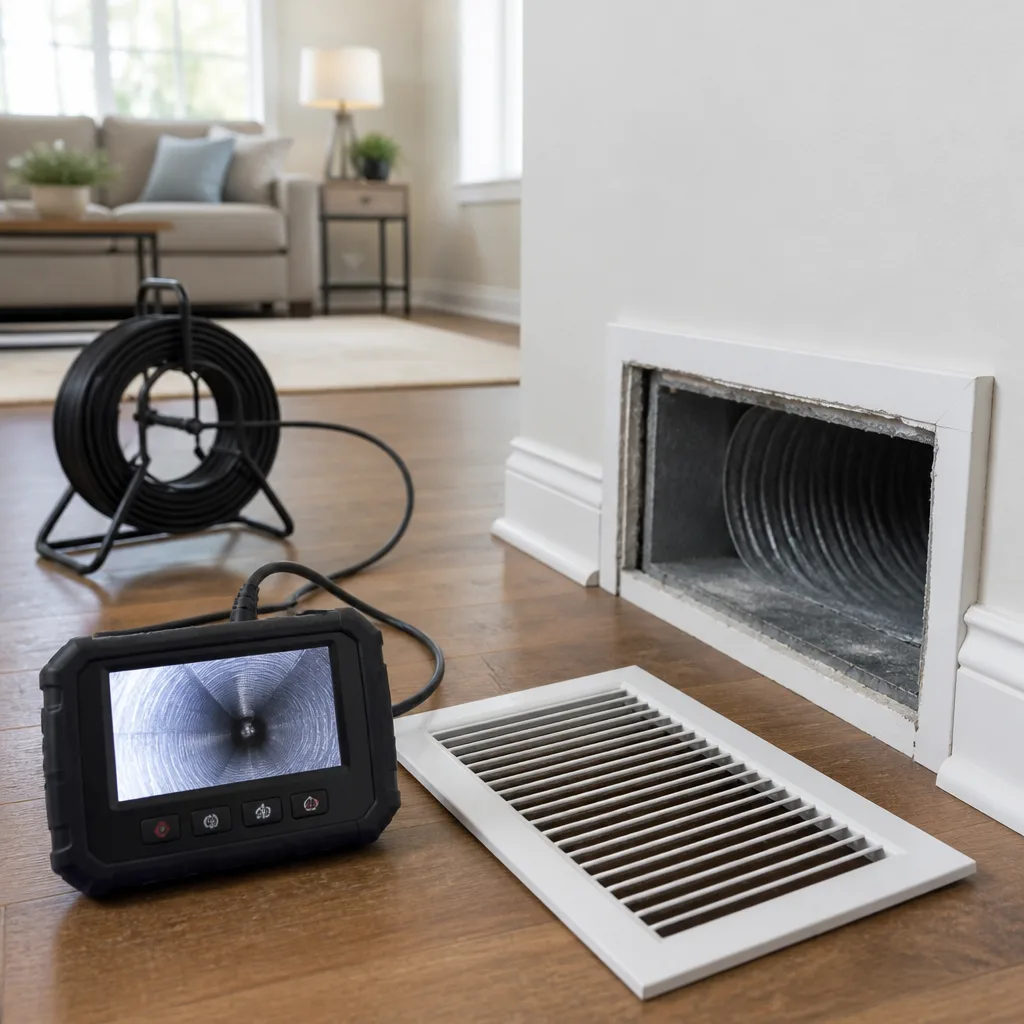 Camera inspection
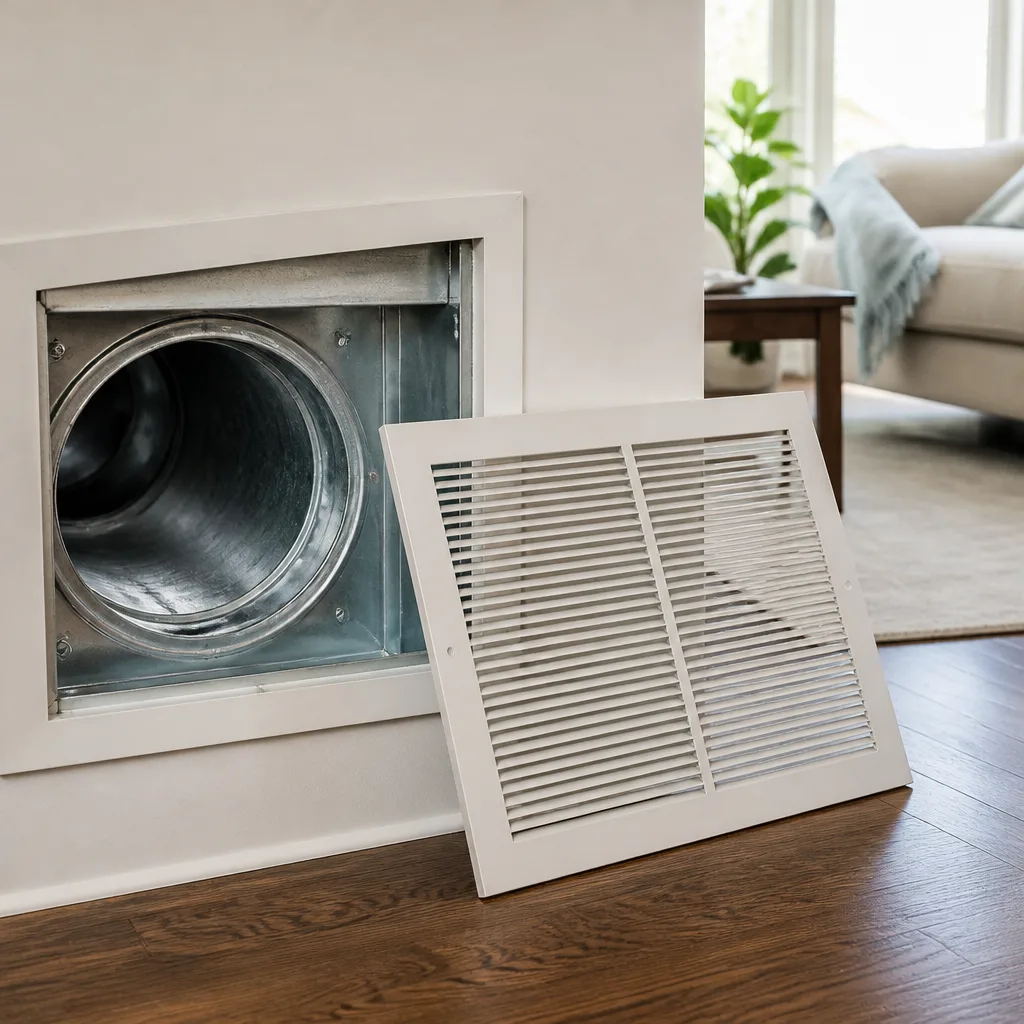 Sanitizing & deodorizing
Whole-system duct and dryer vent check with before-and-after photos - you see exactly what came out of your vents
That "$99 whole-house special" is a bait ad - the real number appears once they are in your hallway, or the "clean" is a shop-vac at the register. We photograph the inside of your ducts before and after instead.
Air Duct Cleaning Warning Signs: A Meridian Homeowner’s Reference Guide
Visible dust on your supply registers is not the first warning sign. It’s one of the last. By the time settled debris is thick enough to see at the grille, the sheet metal behind it has been collecting for months, and the blower has been pushing that load into every room. Most homeowners in Meridian read this as a housekeeping problem, an allergy problem, or a failing furnace. Often it’s none of those. This guide explains how to decode what your home is actually telling you, which signals mean call now, and which mean watch and track.
Quick Answer
Air duct cleaning warning signs in Meridian usually show up in two places: what you can observe (dust streaks at registers, musty odors, visible debris in returns) and what your system’s performance tells you (uneven room temperatures, filters loading faster than usual, weak airflow at distant vents). Visible dust at a grille means the problem has already been building for a while. If you’re seeing two or more of the signs below at once, get the system inspected before the next heating or cooling season.
Styles & brands we work with
- Whole-home duct cleaning
- Dryer vent cleaning
- Camera inspection
- Sanitizing & deodorizing
Table of Contents
- First-Party Warning Signs vs. System Signals: Why You Need Both
- Why Visible Dust at Your Registers Is a Late Warning, Not an Early One
- Decoding Duct Odors: Musty, Chemical, or Something Else
- Uneven Rooms and Weak Airflow as a Duct Restriction Diagnostic
- Filter Loading Rate: The Early Warning Metric You Can Track
- Warning Signs by Meridian Home Type
- Which Signs Mean Monitor and Which Mean Call Now
- When the Problem Is Duct Repair, Not Just Cleaning
First-Party Warning Signs vs. System Signals: Why You Need Both
Duct problems show up in two categories, and most homeowners only watch one of them. First-party signs are what you see, smell, and feel: dust lines at the register, a musty smell when the fan kicks on, a room that never gets warm. System signals are what your HVAC performance reveals: longer run times, filters that clog faster than they used to, uneven static pressure that a technician can measure but you can’t.
First-party signs tell you something is wrong. System signals tell you how wrong and where. A homeowner who only watches for visible dust will usually wait too long, because as covered in the next section, visible dust is a late-stage indicator. A homeowner who only tracks performance data has no idea what the problem looks like at the source. You need both.
What counts as a first-party sign:
- Dark dust streaks or a gray film at supply registers and return grilles
- A musty or stale smell that appears when the air handler starts
- Visible debris inside a return grille when you hold a flashlight to it
- Rooms that feel stuffy even with the system running
- Dust settling on furniture noticeably faster than it used to
What counts as a system signal:
- Filters that need changing weeks sooner than they used to
- Longer heating and cooling run times without a change in weather
- Weak airflow at distant vents compared to nearby ones
- Temperature gaps between rooms of 3 degrees or more
- A technician reporting higher-than-expected static pressure
In our experience working in Meridian, homeowners tend to notice the first-party signs around late summer and early fall, right when the cooling season ends and the heating season starts. That’s also when the contrast between “rooms that were fine in July” and “rooms that aren’t fine in October” becomes obvious. The system signals were there earlier. The homeowner just didn’t have a reason to look for them until the seasons changed. If you only ever watch for visible dust, you’re watching the wrong end of the timeline.
Start tracking both. Filter change dates go on a note on the furnace. Room temperature comparisons get checked once a month in the rooms you actually use. Any change from the previous check is a signal, even if it’s small.
Why Visible Dust at Your Registers Is a Late Warning, Not an Early One
Dust that collects on a supply register is being deposited by the air stream passing through it. That air has just traveled through the entire supply duct behind the register, which means it has had every opportunity to pick up dust from every inch of sheet metal along the way. If dust is settling at the grille, the duct behind it has already accumulated enough loose material to keep depositing for months. The register is the last place the debris touches, not the first.
How accumulation actually works:
- Dust, lint, and pet dander enter the return side of the system from open floor space.
- Some is caught by the filter. Some gets past a filter that’s loaded or the wrong MERV rating.
- Material that gets past the filter sticks to the slightly damp or rough interior surfaces of the duct.
- The blower keeps moving air, and moving air keeps depositing material along the same paths.
- Eventually the deposit is thick enough that some of it works loose and reaches the register.
By step five, the deposit upstream has been building for a while. That’s the part homeowners in Meridian often miss. They see a dusty register, wipe it down, and assume the problem is solved. It usually comes back within a few weeks because the source is unchanged.
What makes this harder is that a dust streak at a register looks the same whether it’s a small local accumulation or the visible end of a much larger load. Only a look inside the ducting tells you which. That’s the reason a real inspection involves opening a plenum or removing a register boot to see what’s actually in the run, not just looking at the grille from the room side.
If you’re seeing dust at more than one or two registers, or if the dust keeps returning after you wipe it away, the system is past the “monitor” window. Call for an inspection before the next season. Dust at a single register with nothing else going on is more likely an airflow leak at that boot than a whole-system problem. Dust across the whole house tells a different story.
Decoding Duct Odors: Musty, Chemical, or Something Else
The smell coming from your vents is diagnostic. A musty or earthy odor points at biological contamination inside the ductwork, whether that’s mold, mildew, or long-term moisture accumulation. An acrid or burning smell points at something electrical or mechanical. A sweet or “refrigerant-like” smell points at a refrigerant leak in the cooling system, not the ducts. Each one needs a different response, and confusing them wastes time and money.
Odor-to-cause quick reference:
- Musty, earthy, “basement” smell: biological growth inside the ducts, often from moisture that got in through an unsealed boot or a humid crawlspace connection
- Stale, dusty, “attic” smell: accumulated dust load, often combined with a degradation of the filter
- Chemical, sharp, or solvent smell: typically indicates a refrigerant issue or a degraded sealant inside the system, not biological growth
- Burning or hot-wire smell: electrical or mechanical problem; shut the system off and get it looked at
- Pet or smoke smell: previous occupant’s deposits in the ducts or on the coil
Musty smells in a Meridian home often show up first in rooms that have their supply registers near the floor on an exterior wall, because those boot connections are the ones most likely to be under-insulated or slightly loose and letting in moisture from outside. They also show up in homes with crawlspace ducts, where ambient crawlspace humidity can migrate into the run if the connections aren’t sealed properly.
The mistake is assuming every musty smell means “mold in my ducts” and every burning smell means “dirty ducts.” A HEPA-contained cleaning with a system like Rotobrush and Nikro equipment will pull out what’s actually in the duct, but a combustion or refrigerant smell needs a different diagnosis first. We work with duct cleaning and repair as a system-level job, and a technician who knows the difference saves the homeowner from paying for the wrong service.
If you smell anything burning or chemical, don’t run the system until it’s checked. If the smell is musty, run the system and watch for where it gets strongest. That’s your point of origin.
Uneven Rooms and Weak Airflow as a Duct Restriction Diagnostic
A room that won’t heat or cool like the rest of the house is the most reliable restriction signal a homeowner can detect without equipment. When airflow drops in a specific room while the rest of the house is fine, the problem is usually in the branch run serving that room: a crushed flex duct, a disconnected boot, a damper stuck partially closed, or accumulated debris in the branch. When several rooms are weak at once, the restriction is more likely upstream: the trunk line, the plenum, or the main return.
How to test without special equipment:
- Pick three rooms: the one closest to the air handler, the one farthest, and the one that always feels worst.
- Set the thermostat to run the fan continuously for an hour.
- Hold a strip of tissue near the supply register in each room and watch how far it moves.
- Check the gap between each room’s temperature and the room you find most comfortable.
- Repeat the test on the same day of the week at roughly the same time, once a month.
In Meridian, the rooms that reveal a blockage first tend to be the ones on the far end of a long trunk run. In a typical two-story home on a slab, that’s often the upstairs room over the garage or the master suite on the far side from the air handler. In a single-story home, it’s usually the bedroom at the end of the hall. These rooms are already the hardest to serve because they’re at the end of the duct path, so the first sign of restriction tends to show up there.
A Meridian home with a buried return, common on slab-on-grade construction, adds a wrinkle. Buried returns can lose airflow to a breach in the pipe under the slab or to a connection that’s worked loose over time. If a whole zone feels weak while filter changes and thermostat settings don’t fix it, that’s a reason to look at the return side, not just the supply side.
Write down what you find each month. A single weak room in a hot summer might just be load. A weak room that stayed weak through the winter is a system signal.
Filter Loading Rate: The Early Warning Metric You Can Track
Filter loading rate is the earliest warning signal a homeowner can track without special equipment, and it’s the one most homeowners ignore because they don’t think to measure it. Loading rate is the time between filter changes when the filter goes from clean to fully loaded. If you used to change the filter every three months and now you’re changing it every six weeks, that acceleration is a signal. The filter is doing its job; there’s just more material in the air than before.
How to track it in one line:
- Write the date on the filter frame every time you install a new one.
- Write the date on a note when you pull it out.
- Look at the interval between dates. That’s your loading rate.
- Compare this interval to the previous two intervals.
- If the interval is shrinking, something upstream changed.
What matters is not the number of days; it’s the trend. A filter that lasts forty days in a home with two pets is not necessarily a problem. The same filter lasting forty days when it used to last ninety is.
Two other signs matter as much as the loading rate itself. A filter that comes out with a gray, greasy sheen rather than a dry, even load points at a different problem: cooking residue, aerosolized oils, or a persistent moisture issue in the ducts. And a filter that comes out barely dirty after a long interval, while the rest of the house is dusty, suggests the filter isn’t the only path for dust; air may be leaking around it or through an unsealed plenum. In our experience in Meridian, that second pattern is common in older homes where the filter housing doesn’t quite seal, or where flex duct in the attic has a small tear letting unfiltered air in.
Track it for three filter changes and you’ll have a baseline. Track it for six and you’ll know whether the system is stable or drifting. All it costs is a marker and a note on the furnace.
Warning Signs by Meridian Home Type
Meridian’s housing stock isn’t uniform, and the warning signs aren’t either. Three home types dominate the area, and each has its own set of failure points and signs that reveal them first.
Slab-on-grade with buried returns
These homes run their return ducting under the concrete slab. That arrangement is efficient, but it hides problems from view. The signs to watch here are airflow that drops across a whole zone rather than one room, dust visible in the return plenum without a matching dust pattern at the registers, and temperature differences that show up seasonally rather than all year. A buried return that has cracked or disconnected can’t be seen from the living space, so the airflow test matters more here than in any other home type. If the airflow at every supply in a zone is weak while the air handler sounds normal, that’s the pattern to flag.
Two-story homes with long trunk runs
Long trunk runs in two-story Meridian homes mean the upstairs rooms on the far end of the run are the first to show restriction. Common signs: the bedroom over the garage or above the front entry feels a few degrees warmer in summer and cooler in winter than the rest of the upstairs, and the drop becomes more pronounced as the system runs. In our experience, these homes often reveal early duct repair needs at boot connections where the installer transitioned from a rigid trunk to a flex branch, because that joint gets stressed when the duct system is used hard across a long season.
Homes with crawlspace ducts
Crawlspace ducting in Meridian homes faces a different set of risks. The signs to watch for here are musty smells that appear only when the system runs, condensation visible on the outside of the duct jacket, and a filter loading rate that spikes after wet weather or a cold snap. Crawlspace runs are particularly vulnerable to connections working loose and insulation falling away, both of which let in ambient crawlspace air. If a musty smell shows up in the home but not the crawlspace itself, the run is likely the source.
If you can identify which home type you’re in, you already know which signs to watch first. That’s the fastest way to a useful diagnosis.
Which Signs Mean Monitor and Which Mean Call Now
Not every signal is urgent. Sorting them into “monitor” and “call” saves money and avoids unnecessary work. Use this as a decision guide.
Monitor (track monthly):
- One room slightly warmer or cooler than the rest, with no change in filter loading rate
- Light dust at a single register that returns slowly after cleaning
- A faint stale smell at system startup that dissipates within a minute
- Filter loading rate stable across two consecutive intervals
Call for inspection:
- Dust streaks appearing at three or more registers
- A musty smell that gets stronger when the system runs and doesn’t dissipate
- Filter loading rate halving compared to the previous interval
- Weak airflow at multiple registers in the same zone
- Any sign of a disconnected or crushed duct
- Visible dust or debris when you look inside a return grille with a flashlight
Call and don’t run the system:
- Burning or hot-wire smell from any register
- Any refrigerant or chemical smell
- Actual water coming out of a register
The rule of thumb: one signal alone usually means watch. Two or more signals at once means call. Anything electrical, chemical, or water-related means stop and call. Meridian’s climate pushes hot summers and cold winters through the same system, so a slow problem can hide for half a year if you only look at signs during one season.
When the Problem Is Duct Repair, Not Just Cleaning
Some warning signs mean the duct system needs repair, not just cleaning. A crushed flex run, a disconnected boot, a broken trunk connection, or a return that has separated at a joint won’t be fixed by cleaning, because the airflow problem is structural. Cleaning a system with a disconnected duct simply sends HEPA-filtered air past a leak on the way out of the duct. You have to fix the leak before the cleaning delivers the airflow improvement it’s supposed to.
Signs the system needs a repair before or alongside cleaning:
- Airflow that’s been weak at one register for months and doesn’t respond to filter changes
- Visible daylight or attic insulation inside a return boot or register
- A whistling sound at a specific register or boot
- Dust concentrated at one register that returns faster than at the others
- Visible sagging or kinking in a branch duct where you can see it
Our approach in Meridian is to inspect first and clean second so that a repair is only recommended when there’s an actual structural problem. Using Abatement Technologies containment equipment during the cleaning protects living spaces from the debris that gets dislodged, and HEPA-rated Nikro gear captures what’s pulled out rather than recirculating it. But containment doesn’t fix a broken boot. Repair does.
If a repair is needed, it’s done before the cleaning so the system is sealed and functioning before it’s cleaned. That order matters. Cleaning a leaky system doesn’t deliver the result the homeowner paid for.
Common Mistakes to Avoid
- Reading visible dust as an early sign. It’s a late sign, and treating it as the first thing to look for means you’ll almost always catch the problem after it’s already substantial. Watch the filter loading rate and airflow instead; those are earlier.
- Wiping the register and assuming the problem is solved. A wiped grille returns to dusty within weeks because the source upstream is unchanged, and that misreading has led plenty of Meridian homeowners to delay a needed inspection until the system was running hard in the wrong direction.
- Treating every musty smell as mold or every burning smell as dirty ducts. A refrigerant or combustion smell needs a different diagnosis first: shut the system down and get the specific cause identified before booking any duct service.
- Ignoring the filter loading trend. Most homeowners look at the filter’s current condition rather than its change over time, so they miss the earliest signal that something upstream is going wrong.
- Assuming one weak room is a load problem. In a Meridian two-story with a long trunk run, one persistently weak room is more often a duct restriction in that branch than a load calculation issue. Airflow test first, HVAC diagnosis second.
- Booking a cleaning when the problem is a repair. Cleaning a system with a disconnected duct doesn’t fix airflow and doesn’t protect the home from the leak. A pre-cleaning inspection catches that.
- Waiting for the next season change to act. Meridian’s summer and winter both put the system through a hard run; a signal that shows up in one season rarely improves by the next. Either monitor and track, or call.
See the difference
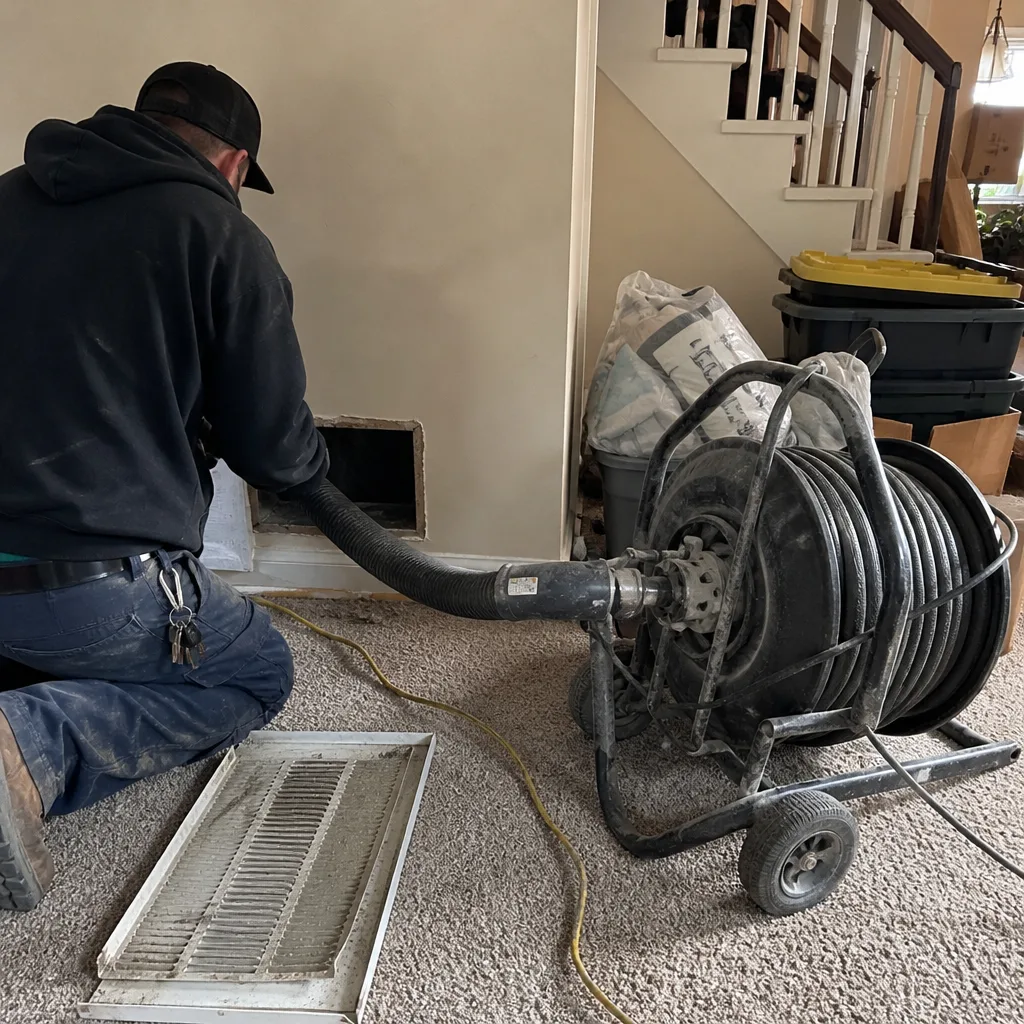 Before
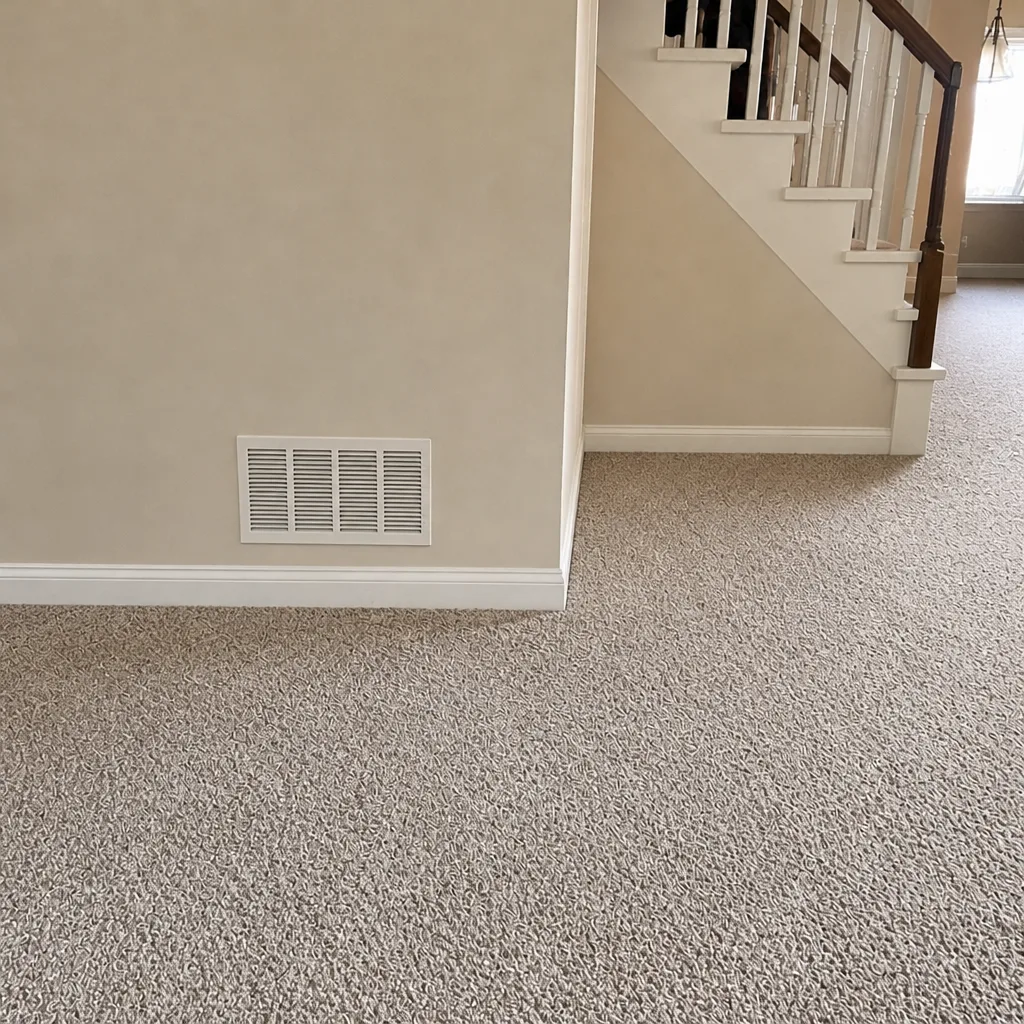 After
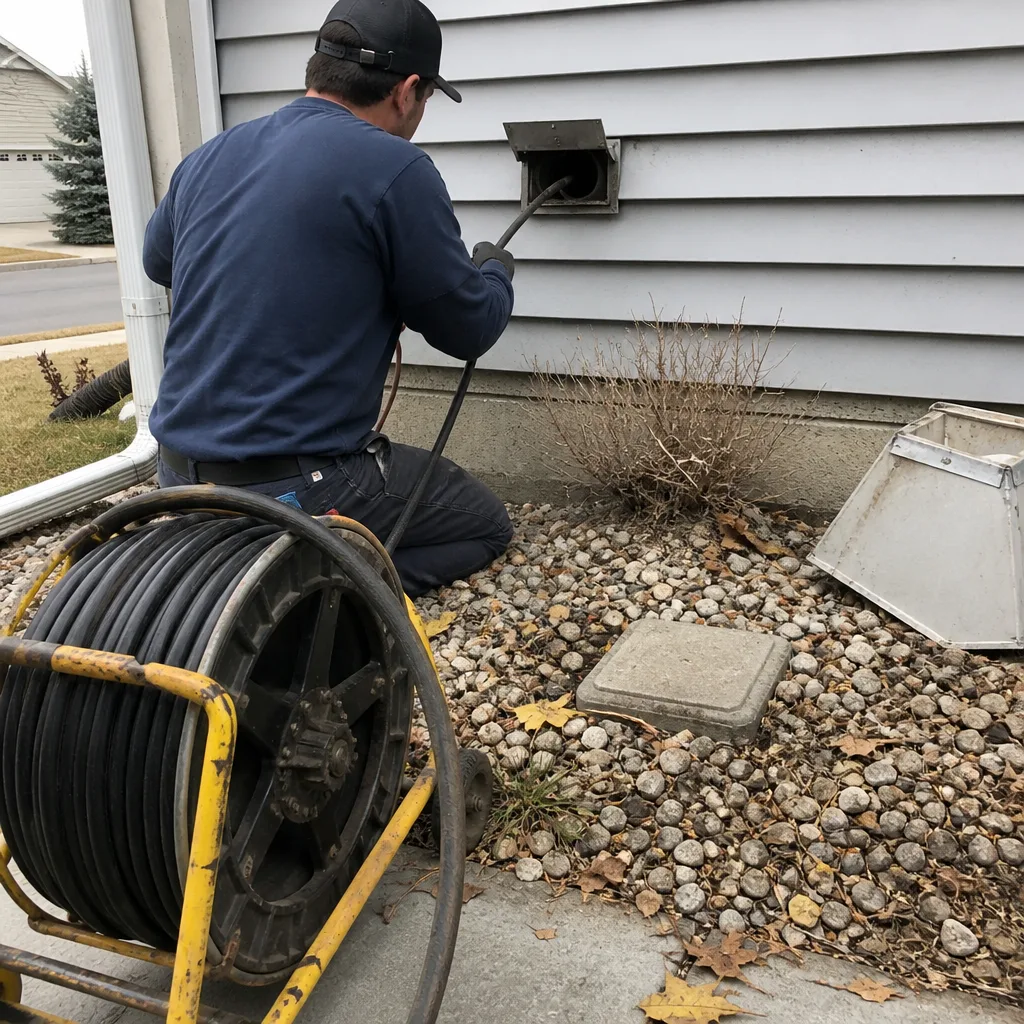 Before
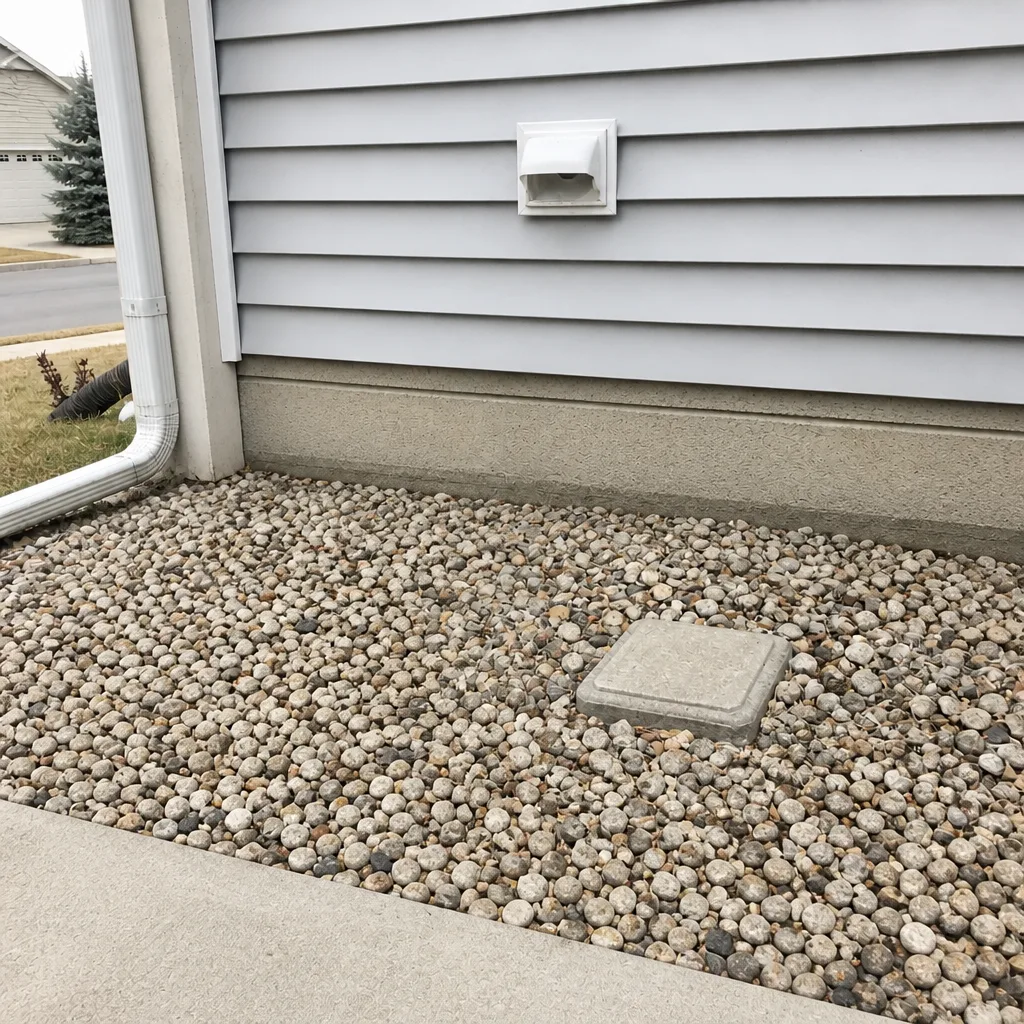 After
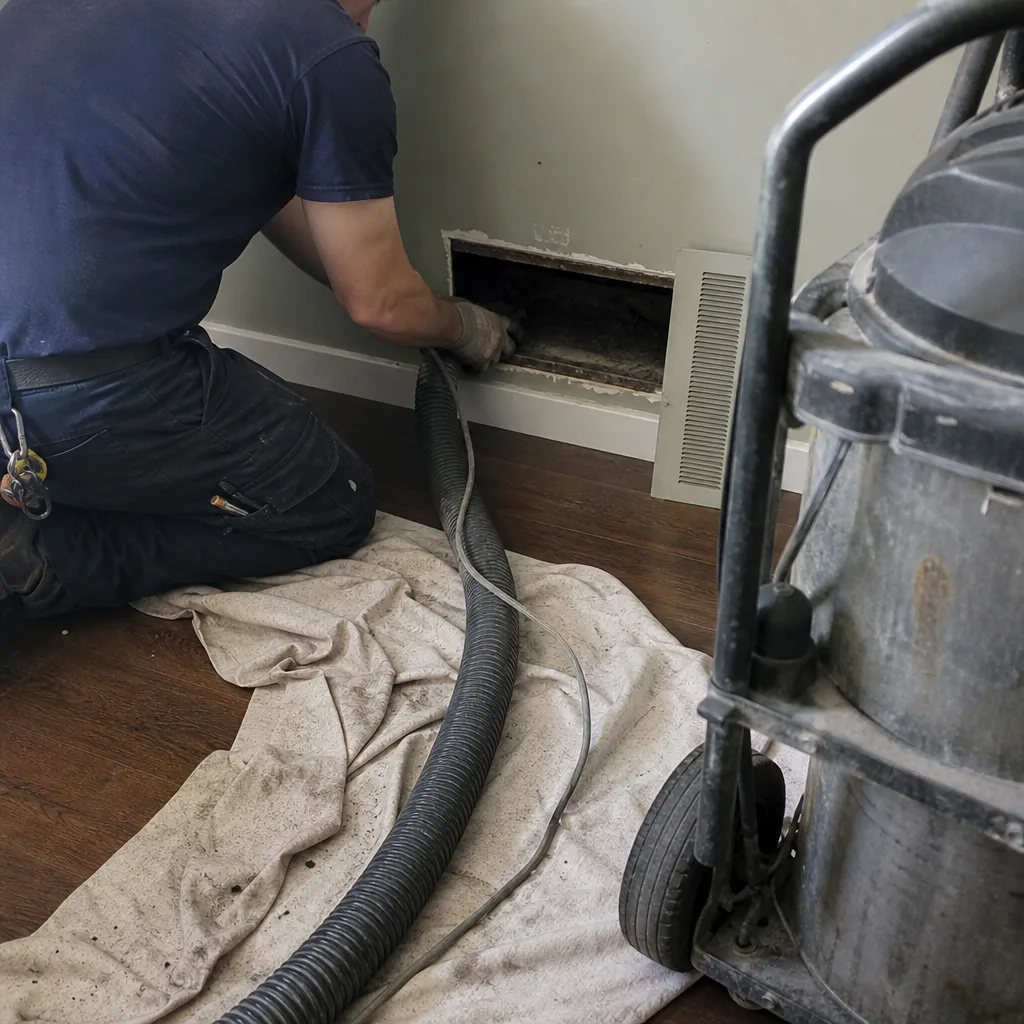 Before
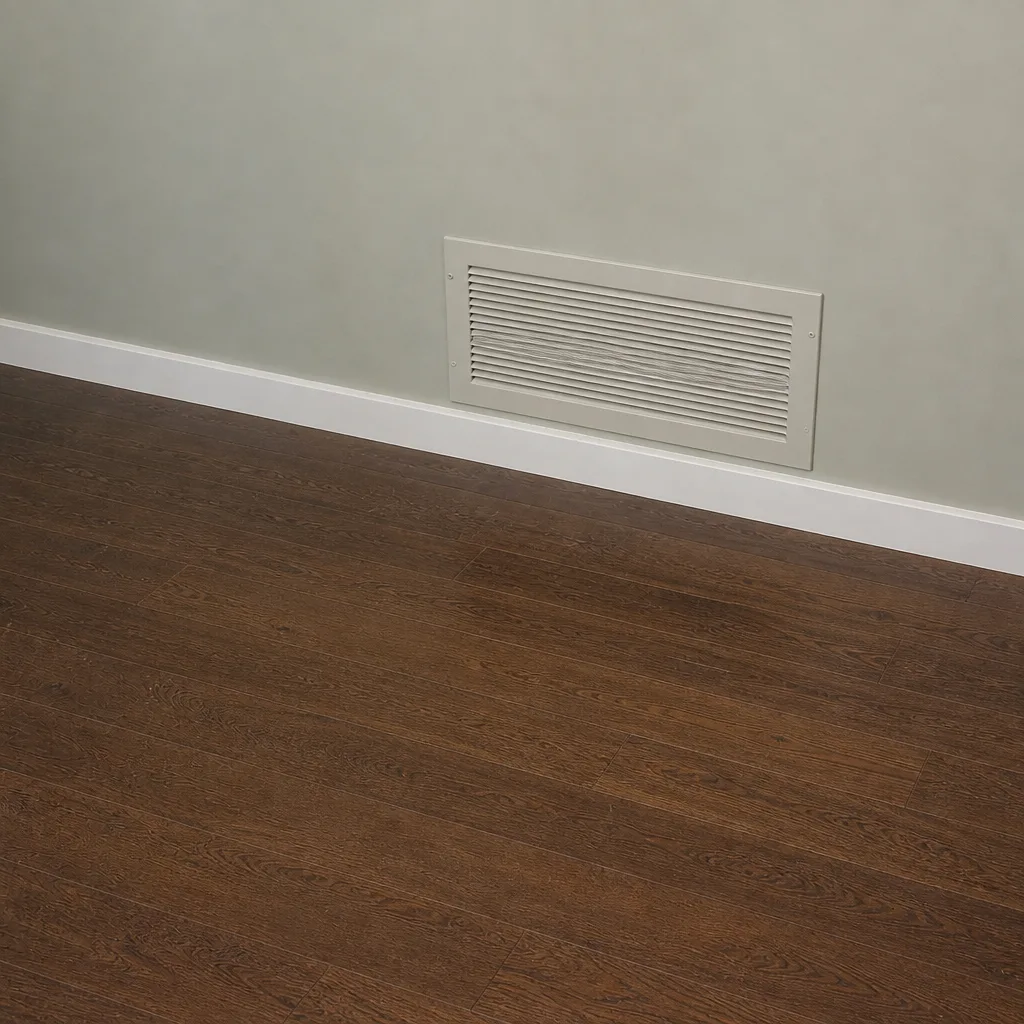 After
When to Call a Professional
Call a professional when you have two or more warning signs at once, when a musty smell doesn’t clear after the system has run for several minutes, when filter loading rate has halved, or when any sign points at a possible disconnected, crushed, or sagging duct. Call immediately for burning, chemical, or refrigerant smells, and don’t run the system until it’s been checked. Our technicians have up to 12 years of experience diagnosing the difference between a cleaning signal and a repair signal, and we use professional-grade equipment including Rotobrush contact-vacuum systems and Nikro HEPA-rated vacuums so what gets pulled out stays captured. Duct Cleaning Meridian offers free estimates in Meridian. Call (866) 389-4992. We answer 24/7. Fast dispatch from 7am to 7pm, Sunday through Friday.
If you’d rather start with the big picture, our Duct Cleaning Meridian page covers what a full service visit involves. If you already know the system needs work, our air duct cleaning page breaks down the process and what happens on the day. And if the warning sign you’re chasing is lint around the dryer rather than dust at the registers, see our dryer vent cleaning page for the fire-safety side of the same system-level thinking. For the broader local context on HVAC performance and home construction across the area, the Meridian page is a good place to start.
Frequently Asked Questions
Air duct cleaning in Meridian is priced per system, not per vent, and the final price comes from the written estimate after inspection. We agree one flat price per system before any work starts, so you’re not comparing a coupon headline to a technician’s invoice. Call (866) 389-4992 for a free estimate.
Most homes don’t need a fixed schedule. The right interval depends on filter loading rate, pet load, recent renovation, and whether the signs in this guide are present. If your filter loading rate is stable and no other signals are showing, you can usually extend the interval. If two or more signals are active, get an inspection rather than wait for a calendar date. Call (866) 389-4992 when you’re ready for an assessment.
Low quotes usually mean per-vent pricing, consumer-grade vacuums, no containment, or all three. A shop-vac setup doesn’t extract what a Rotobrush contact-vacuum system and Nikro HEPA-rated equipment can, and without Abatement Technologies containment gear the debris you paid to remove can end up in your living space. Our price is one flat price per system agreed before work starts. Call (866) 389-4992 for an honest estimate.
Ask for before-and-after photos of your own ducts, not stock images. A technician using the right equipment has no reason not to show you the before and after on your system. Ask what equipment was used, and ask for the containment plan before the work begins. If a company can’t answer those plainly, that’s your answer.
Yes, when the smell is earthy and gets stronger when the system runs. That pattern points at biological growth or long-term moisture in the ductwork, often from an unsealed boot or a crawlspace connection. A sharp, chemical, or refrigerant smell suggests a different problem. If the smell is musty and persistent, call (866) 389-4992 for an inspection before the next season.
Sometimes, but not always. Cleaning removes debris-related restrictions; repair fixes structural ones like a crushed flex duct or a disconnected boot. In Meridian homes with long trunk runs or buried returns, uneven temperatures often point at a repair before they point at a cleaning. An inspection on-site sorts which one you have before you commit to a service.
The Bottom Line
The most useful thing you can do is stop treating duct warning signs as one category. Watch the observable signs (dust at registers, musty smell, weak airflow) alongside the system signals (filter loading rate, run times, room temperature gaps). When one signal shows up, monitor and track. When two or more show up together, get an inspection. Keep the electrical, chemical, and water signs separate from everything else: those mean stop and call. And when the inspection shows a structural problem, repair comes before cleaning. Tracking the trend beats reacting to the grille.
If you’re ready to have a trained technician look at the system, call Duct Cleaning Meridian at (866) 389-4992 for a free estimate. We answer 24/7. Fast dispatch from 7am to 7pm, Sunday through Friday.
Written by the team at Duct Cleaning Meridian.